Composer
Camille Saint-Saëns
A child prodigy who lived to 86 - and wrote The Carnival of the Animals as a joke.
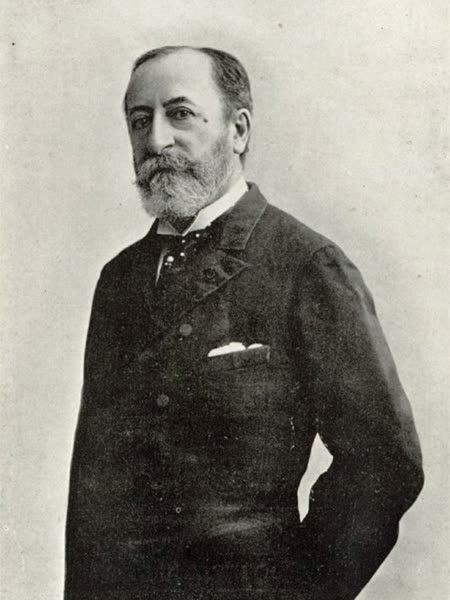
Camille Saint-Saëns was one of the most astonishing child prodigies in history, and one of the most prolific and versatile composers of the 19th century. He wrote in every genre, played the organ and piano brilliantly, and lived long enough to go from the age of Chopin to the age of jazz. Today he is best loved for The Carnival of the Animals, a piece he wrote as a private joke.
Life in brief
Saint-Saëns was born in Paris in 1835. His father died when he was a baby, and he was raised by his mother and great-aunt, who began teaching him the piano when he was two. He was composing before he was five, and at ten he gave a public debut recital in Paris; as an encore, he offered to play any of Beethoven's thirty-two piano sonatas from memory.
He studied at the Paris Conservatoire and became one of the finest organists in France, serving for almost twenty years at the Church of the Madeleine in Paris, where Liszt heard him and called him the greatest organist in the world. While teaching at a music school in the early 1860s, he befriended a young pupil, Gabriel Fauré, who became a lifelong friend. In 1871 he helped found the Société Nationale de Musique to promote new French music.
His private life was marked by tragedy: in 1878 both of his young sons died within six weeks of each other, and his marriage soon ended. He sought consolation in constant work and travel, visiting North Africa, Asia, and the Americas, and wintering in Algeria. He kept composing into his eighties, and died in Algiers in 1921.
Music and style
Saint-Saëns admired clarity, elegance, and craftsmanship above all. His music is melodious, beautifully orchestrated, and formally polished, drawing on Bach, Mozart, and Mendelssohn as much as on Liszt. In his youth he was a progressive champion of Liszt and Wagner; in old age he became a famously grumpy conservative, outraged by the music of Debussy. He was also a poet, playwright, astronomer, and writer on many subjects.
Key works
- The Carnival of the Animals (1886) - fourteen humorous musical portraits, from lions and kangaroos to "Pianists." He banned its publication in his lifetime, except for "The Swan," a beloved cello solo.
- Symphony No. 3, "Organ" (1886) - his grandest work, with a thrilling finale for full orchestra and organ.
- Danse macabre (1874) - Death plays a demonic violin at midnight while skeletons dance, their bones rattling on the xylophone. See symphonic poem.
- Samson et Dalila (1877) - his only lasting opera, with the seductive aria "Mon cœur s'ouvre à ta voix."
- Piano Concerto No. 2 (1868) - written in just seventeen days, it "begins with Bach and ends with Offenbach," as one wit put it.
- Introduction and Rondo Capriccioso (1863) - a sparkling showpiece for violin and orchestra.
In 1908 he also wrote the music for L'Assassinat du duc de Guise, one of the first original scores composed for a film. See film score.
Legacy
Saint-Saëns was a central figure of French music for more than half a century, and his concertos, the "Organ" Symphony, and The Carnival of the Animals remain hugely popular. His craftsmanship set standards for the generation of Fauré and Ravel. See also the Romantic era.
Where to start listening: The Carnival of the Animals, especially "The Swan" and "Aquarium." Then try the finale of the "Organ" Symphony, and Danse macabre.