Composer
Jules Massenet
The most successful French opera composer of his age, and the creator of the Méditation.
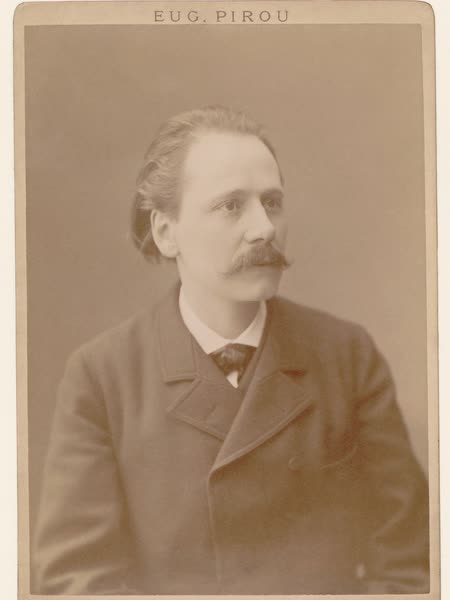
Jules Massenet was the most successful French opera composer of the late 19th century, a master of elegant, sensual melody and of the stage. His operas Manon and Werther are staples of opera houses around the world, and the violin "Méditation" from his opera Thaïs is one of the most beloved melodies ever written.
Life in brief
Massenet was born in 1842 in Montaud, near Saint-Étienne in central France, and the family later moved to Paris. He entered the Paris Conservatoire at only eleven, supported himself as a young man by playing the timpani in theatre orchestras and piano in cafés, and in 1863 won the Prix de Rome, the most coveted prize for young French composers.
After early successes in the concert hall and theatre, his opera Hérodiade (1881) and above all Manon (1884) made him the leading figure in French opera. He wrote more than twenty-five operas, worked with great singers, and had an unerring sense of what would please an audience. From 1878 to 1896 he was a popular and influential professor of composition at the Conservatoire. He kept composing until the end, and died in Paris in 1912.
Music and style
Massenet's music is graceful, warm, and seductive, with flowing melodies that follow the natural rhythms of the French language, delicate orchestration, and a gift for portraying passionate, vulnerable heroines. Critics sometimes mocked his music as sentimental and sweet, but it is crafted with great skill and dramatic instinct. He absorbed some of Wagner's techniques, such as recurring themes, while remaining thoroughly French.
Key works
- "Méditation" from Thaïs - a radiant interlude for solo violin and orchestra, played as the heroine contemplates a new life.
- Manon (1884) - the story of a young woman torn between love and luxury, his most popular opera.
- Werther (1892) - a tragic opera based on Goethe's novel of doomed love, with the tenor aria "Pourquoi me réveiller?"
- Thaïs (1894) - an opera about a courtesan in ancient Egypt and a monk who tries to convert her.
- Cendrillon (1899) - an enchanting version of the Cinderella story.
- Don Quichotte (1910) - a touching late opera on Cervantes' knight.
Legacy
Massenet's operas dominated the French stage in his lifetime, and after a period of neglect, they are again widely performed. His influence can be heard in Puccini's vocal style. See also the Romantic era.
Where to start listening: the "Méditation" from Thaïs, then highlights from Manon and Werther's aria "Pourquoi me réveiller?"