Instrument
Cello
A warm, tenor-to-bass voice, played upright and braced against the floor.
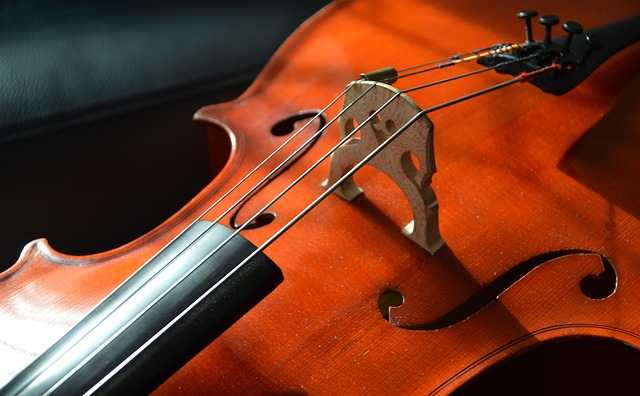
The cello is the second-largest bowed member of the string family, played upright between the knees and braced against the floor with a metal endpin. Its range sits closer to the human voice than any other orchestral string instrument, which is a large part of why cello melodies are often described as sounding especially warm, expressive, or vocal.
In the orchestra, cellos frequently double the bass line an octave above the double bass, reinforcing the harmonic foundation, but they're just as often given rich, singing melodic lines of their own - especially in the Romantic era, when composers leaned heavily on the cello's emotional weight. In a string quartet, the cello anchors the bottom of the texture, alongside the violin and viola.
Alongside its orchestral and chamber roles, the cello has a substantial solo repertoire, including Bach's six unaccompanied Cello Suites - among the most performed and recorded solo works for any instrument. Those suites were relatively obscure until the Spanish cellist Pablo Casals discovered a copy as a teenager and spent years studying them before performing and recording them publicly, almost single-handedly moving them into the center of the repertoire.
Like the violin and viola, the cello is tuned in fifths, just pitched an octave and more lower (typically C-G-D-A), and it shares the same four-string design scaled up. Beyond Bach, the instrument's concerto repertoire includes two particularly beloved Romantic-era works - Dvořák's Cello Concerto, written during his time in the United States, and Elgar's Cello Concerto, an elegiac, autumnal piece written in the aftermath of the First World War.
Where to start listening: Bach's Cello Suite No. 1 (specifically its famous opening Prelude) is the instrument's most iconic solo moment. Elgar's Cello Concerto is a good next step for its very different, more melancholy character.