Composer
Claude Debussy
The composer who traded harmonic narrative for color and atmosphere.
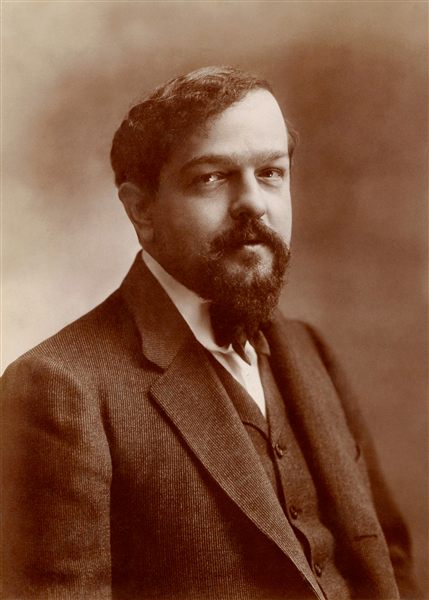
Claude Debussy is the central figure behind musical Impressionism, even though he reportedly disliked having the label (borrowed from painting) applied to his own work. Rather than building music around clear harmonic tension and resolution the way Classical and Romantic composers did, Debussy favored ambiguous, often unresolved harmony, unconventional scales, and shimmering orchestral or pianistic color, aiming for atmosphere and sensory impression over a linear musical story.
Clair de Lune, part of his early Suite bergamasque for piano, is his single most famous piece and a clear example of his gentle, hazy harmonic language. His orchestral Prelude to the Afternoon of a Faun pushed the same sensibility onto a full orchestral canvas, and is often cited as one of the pieces that opened the door to 20th-century modernism - its famous opening flute melody floats free of any strong sense of harmonic direction.
Debussy's influence extends well beyond composers who directly imitated his style; his loosening of harmonic rules gave later 20th-century composers permission to abandon traditional tonal logic even further.
Where to start listening: Clair de Lune is the most accessible entry point in his entire output; Prelude to the Afternoon of a Faun is the natural next step into his orchestral writing.