Composer
Vincenzo Bellini
The master of long, flowing melody, and a giant of bel canto opera.
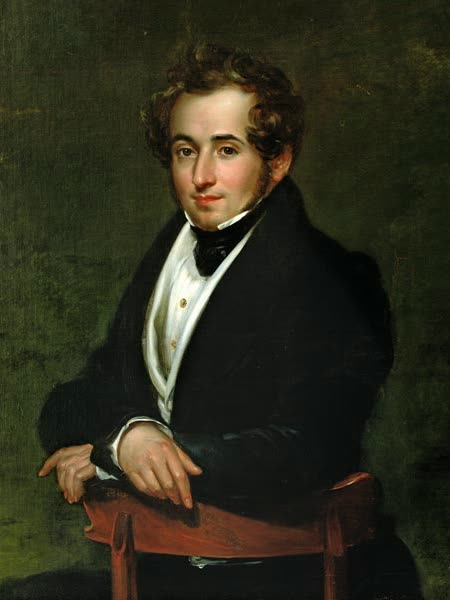
Vincenzo Bellini wrote some of the most beautiful melodies in all of opera. In a short career of barely ten years he composed ten operas, and works such as Norma and La sonnambula became pillars of bel canto ("beautiful singing"), the Italian style that prizes the human voice above all.
Life in brief
Bellini was born in 1801 in Catania, Sicily, into a family of musicians. He studied at the conservatory in Naples, where his first opera was staged as a student exercise. His breakthrough came in 1827 with Il pirata at La Scala in Milan, the first of several operas written with the poet Felice Romani, whose elegant librettos suited Bellini perfectly.
Over the next few years he produced a string of successes, including I Capuleti e i Montecchi (1830), his version of the Romeo and Juliet story, and two masterpieces in a single year, 1831: La sonnambula and Norma. Unlike many Italian composers of the time, who wrote several operas a year, Bellini worked slowly and carefully, polishing every melody, and he was paid handsomely for it.
In 1833 he moved to Paris, where he befriended Chopin and wrote his last opera, I puritani (1835), a triumph. A few months later, he fell ill and died near Paris, aged just thirty-three. Decades later his remains were brought home to Catania Cathedral.
Music and style
Bellini's genius was melody: long, arching, slowly unfolding lines that follow the words with great sensitivity and seem to float above a simple accompaniment. Verdi spoke admiringly of his "long, long, long melodies," and Chopin's lyrical style owes much to them. His orchestration is modest, his harmony simple, but the vocal writing is exquisitely expressive, and demands singers of great breath control, beauty of tone, and agility.
Key works
- Norma (1831) - the tragedy of a Druid priestess who has secretly broken her vows, one of the greatest roles for soprano. See opera.
- "Casta diva" - Norma's serene prayer to the moon, perhaps the most famous bel canto aria of all.
- La sonnambula (1831) - a gentle story of a village girl who sleepwalks, with dazzling music for the heroine.
- I puritani (1835) - his final opera, set during the English Civil War.
- I Capuleti e i Montecchi (1830) - Romeo and Juliet, with Romeo sung by a mezzo-soprano.
- Il pirata (1827) - the work that made his name.
Legacy
Bellini's operas fell out of favor in the late 19th century, but in the 1950s the soprano Maria Callas brought Norma back to life, sparking a revival of bel canto that continues today. See also Donizetti, Rossini, and our voice types guide.
Where to start listening: "Casta diva" from Norma, ideally in Maria Callas's recording, then the sleepwalking scene from La sonnambula.