Composer
Mikhail Glinka
The father of Russian classical music.
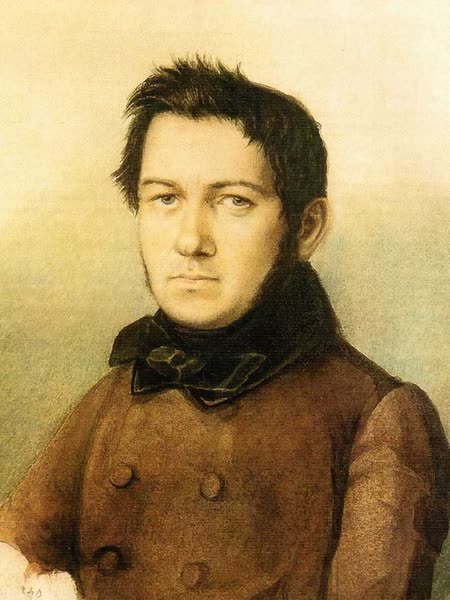
Mikhail Glinka is called the father of Russian classical music. Before him, music in Russia was dominated by Italian, French, and German styles; Glinka was the first composer to create works that sounded distinctly Russian and won lasting international respect. Every Russian composer who followed, from Mussorgsky to Tchaikovsky, owed him a debt.
Life in brief
Glinka was born in 1804 on his family's country estate in the Smolensk region, into a wealthy landowning family. He grew up hearing Russian folk songs and the church bells and serf musicians of the estate, and later worked for a time as a civil servant in St. Petersburg while studying music on the side.
In 1830 he traveled to Italy, where he met Bellini and Donizetti and absorbed the Italian operatic style, and then studied counterpoint in Berlin. He returned home determined to write a Russian opera, and A Life for the Tsar (1836), about a peasant who sacrifices his life to save the tsar, was a great success. His second opera, Ruslan and Lyudmila (1842), based on a fairy-tale poem by Alexander Pushkin, was less well received at first, but is now considered his masterpiece.
He spent long periods abroad, including two years in Spain, where he collected folk melodies. He died in Berlin in 1857.
Music and style
Glinka combined the polish of Italian and German music with Russian folk melody, harmony, and rhythm. He liked to repeat a folk tune with ever-changing orchestration and accompaniment, rather than developing it in the German way, a technique that became typical of Russian music. His orchestration is brilliant and colorful, and his music has a lightness and energy all its own.
Key works
- Ruslan and Lyudmila Overture (1842) - a dazzling, breathless curtain raiser, one of the most popular in the repertoire. See overture.
- A Life for the Tsar (1836) - the first Russian opera to win lasting fame. See opera.
- Kamarinskaya (1848) - a short orchestral fantasy on two Russian folk songs. Tchaikovsky said that the whole of Russian symphonic music was contained in it, "as the oak is in the acorn."
- Jota aragonesa (1845) - a Spanish overture inspired by his travels.
- "The Lark" - a wistful song, famous in a piano arrangement by Mily Balakirev. See art song.
- Patriotic Song - a piano melody that served as the Russian national anthem in the 1990s.
Legacy
Glinka's music inspired the group known as "The Five," including Mussorgsky, Borodin, and Rimsky-Korsakov, who saw him as the founder of their national school. See also the Romantic era.
Where to start listening: the Overture to Ruslan and Lyudmila, then Kamarinskaya and Jota aragonesa.