Musical Form
Opera
Fully staged musical drama - singers, orchestra, and theater combined.
Vocal / Staged
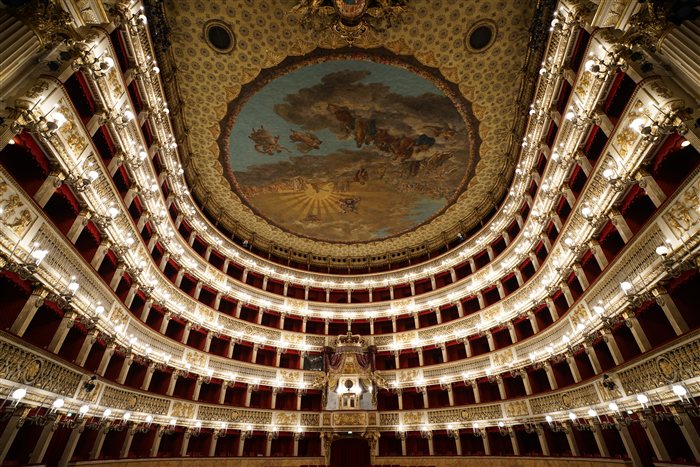
Opera is theater told (almost) entirely through music: singers act out a drama on stage, accompanied by an orchestra, with the sung dialogue and music carrying the emotional weight that spoken lines would carry in a play. It emerged in Italy around 1600, right at the start of the Baroque era, as composers experimented with setting entire dramatic texts to music.
A few recurring building blocks show up across most operas. An aria is a solo song, usually a moment where the plot pauses so a character can express an emotional state at length - these are opera's most famous excerpts, the parts that get performed on their own in concert. Recitative is a speech-like, loosely sung style used to move the plot forward between arias. An overture opens the whole evening, an instrumental prelude played before the curtain rises.
By the Romantic era, opera had become a dominant cultural form across Europe, with distinct national traditions: Italian opera (Verdi, Puccini) built around vocal melody and drama; German opera (Wagner) pursuing enormous, continuous musical structures spanning entire multi-hour cycles; and beyond, into the 20th century, opera continuing to evolve alongside every other part of the classical tradition.
Where to start listening: Puccini's La Boheme is one of the most accessible full operas for a first watch; as a shorter first taste, look up "Nessun Dorma" from his Turandot, or the Habanera from Bizet's Carmen.