Composer
Franz Liszt
The piano's first touring superstar, and the composer who invented the symphonic poem.
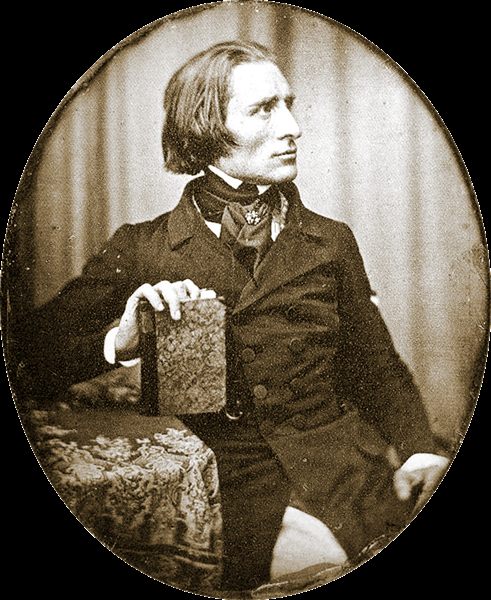
Franz Liszt was, before he was much else, the piano's first genuine touring virtuoso celebrity - inspired to pursue that level of showmanship after seeing the violinist Niccolo Paganini perform in Paris, he built a career whose piano recitals reportedly provoked crowd reactions intense enough that the phenomenon earned its own name, "Lisztomania."
His Hungarian Rhapsodies, drawing on Hungarian and Romani folk melody, essentially established the rhapsody as a genre: a free, episodic structure built for emotional and technical display rather than following inherited forms like the symphony. Liszt also invented the symphonic poem outright
- a single-movement orchestral work built to depict a specific subject - a form Richard Strauss and others would later take even further.
Later in life, Liszt largely retired from public performance and turned to composing and teaching, producing increasingly experimental late works that anticipated some of the harmonic ambiguity 20th-century composers would fully embrace.
Where to start listening: Liebestraum No. 3 is his most tender, widely loved piano piece; Hungarian Rhapsody No. 2 shows the technical fireworks that built his reputation.