Composer
Ludwig van Beethoven
The composer who pushed Classical-era forms until they became Romantic ones.
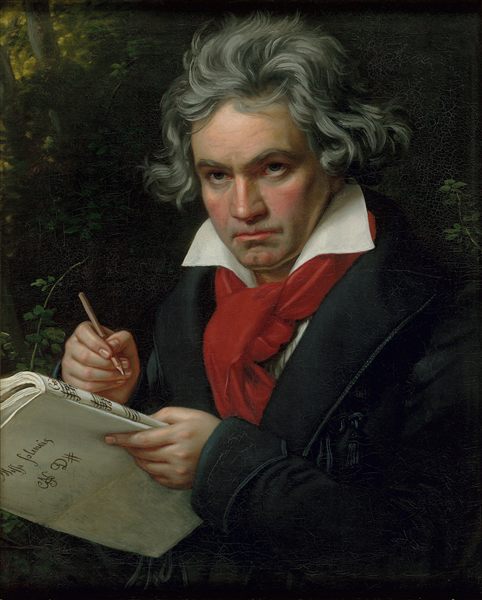
Ludwig van Beethoven trained in the Classical tradition of Haydn and Mozart and started his career writing confidently within it, but spent the following decades stretching every form he touched - the symphony, the piano sonata, the string quartet - further than Classical-era convention allowed, in the process becoming the single most important bridge between the Classical and Romantic eras.
He composed much of his most ambitious work while going progressively deaf, a fact that makes his later output especially remarkable: his Symphony No. 9, completed after he had lost essentially all of his hearing, introduces full chorus and vocal soloists into a symphony for the first time, culminating in the "Ode to Joy." His Symphony No. 5 opens with one of the most recognizable four-note motifs in all of music, driving an entire movement from a tight kernel of material.
His piano sonatas, including the famous Moonlight Sonata, trace the same arc across his career - from Classical-era clarity toward a more personal, expansive, and emotionally direct style that Romantic-era composers would inherit directly.
Where to start listening: Symphony No. 5's opening movement is the most famous four minutes in classical music; the Moonlight Sonata's first movement is a quieter, more intimate entry point.