Composer
Edvard Grieg
Norway's national voice, master of the miniature, and the composer of the Mountain King.
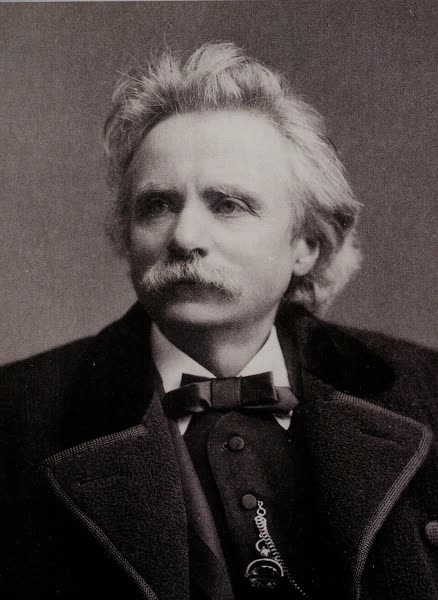
Edvard Grieg gave Norway its own voice in classical music. Drawing on the folk songs, dances, and landscapes of his homeland, he became one of the leading figures of Romantic nationalism, and a handful of his melodies - "Morning Mood," "In the Hall of the Mountain King" - are among the most familiar in all of music.
Life in brief
Grieg was born in Bergen, on Norway's west coast, in 1843. His mother, a pianist, gave him his first lessons, and on the advice of the famous Norwegian violinist Ole Bull he was sent at fifteen to study at the Leipzig Conservatory. He found the training dry, and a serious illness there left him with damaged lungs and poor health for the rest of his life.
Back in Scandinavia, a friendship with the young composer Rikard Nordraak fired his ambition to create a distinctly Norwegian music. In 1867 he married his cousin, the singer Nina Hagerup, who inspired many of his songs. His Piano Concerto, written at twenty-four, made his name across Europe - according to a famous story, Liszt sight-read it from the manuscript and praised it warmly.
In 1874 the playwright Henrik Ibsen asked him to write music for his play Peer Gynt, and the result became Grieg's best-known work. From 1885 he lived at Troldhaugen, a villa near Bergen, where he composed in a small hut overlooking the fjord. He toured widely as a pianist and conductor and was honored across Europe. He died in Bergen in 1907.
Music and style
Grieg was at his best in short forms: songs, dances, and piano miniatures, full of fresh melody, folk-like drones and rhythms, and harmonies that still sound surprising. He described his music as rooted in Norway's folk traditions and landscapes, and pieces like "Morning Mood" paint pictures in sound. Though he wrote few large works, his concerto shows he could think on a grand scale too.
Key works
- Peer Gynt (1875) - incidental music for Ibsen's play, now best known through two orchestral suites, including "Morning Mood" and "In the Hall of the Mountain King."
- Piano Concerto in A minor (1868) - one of the most popular concertos ever written, with its famous thunderous opening.
- Holberg Suite (1884) - a Baroque-style suite for strings, written to celebrate the playwright Ludvig Holberg.
- Lyric Pieces - 66 short piano pieces published in ten books, including "Wedding Day at Troldhaugen."
- Songs - many written for his wife Nina, including "I Love You" (Jeg elsker dig).
Legacy
Grieg showed composers in smaller countries that they could build a musical identity from their own traditions, and his harmonic freshness influenced composers as different as Debussy and Ravel. His music remains a national symbol in Norway, and Troldhaugen is now a museum and concert venue.
Where to start listening: "Morning Mood" and "In the Hall of the Mountain King" from Peer Gynt are two of the most recognizable pieces in the repertoire. Then try the first movement of the Piano Concerto, or a handful of the Lyric Pieces.