Composer
Alexander Borodin
The chemist who composed on Sundays - and wrote some of Russia's most beautiful tunes.
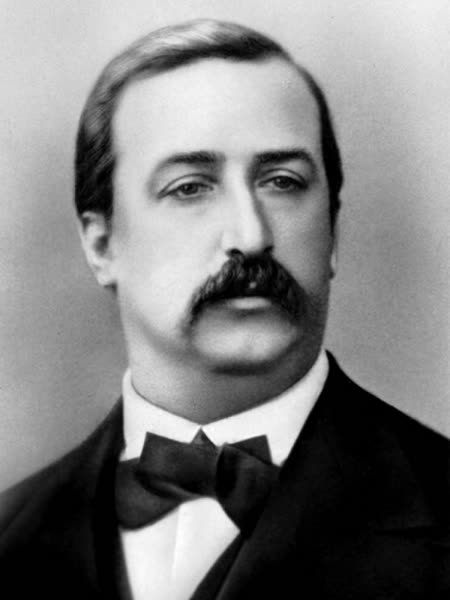
Alexander Borodin was a distinguished research chemist who composed in his spare time, calling himself a "Sunday composer." He wrote relatively little music, and left his great opera unfinished, but his melodies are so beautiful that some of them became Broadway hits more than sixty years after his death.
Life in brief
Borodin was born in St. Petersburg in 1833, the illegitimate son of an elderly Georgian prince, and was officially registered as the son of one of the prince's serfs - a common way of hiding such births. He grew up in comfort with his mother, learned the flute, piano, and cello, and composed as a child, but his deepest passion was chemistry.
He studied medicine and chemistry in St. Petersburg, did research in Germany and Italy, and became a professor at the Medical-Surgical Academy in St. Petersburg, publishing important work in organic chemistry. He was also a champion of women's education, helping to found medical courses for women.
In 1862 he met Mily Balakirev and joined the circle of composers later called "The Five," alongside Mussorgsky and Rimsky-Korsakov. Between his laboratory, his teaching, and his crowded, hospitable household, he found little time to compose, and his opera Prince Igor occupied him for eighteen years without being finished. He died suddenly in 1887, collapsing at a costume ball he was hosting. Rimsky-Korsakov and Alexander Glazunov completed and orchestrated Prince Igor, which was first staged in 1890.
Music and style
Borodin's music is lyrical, warm, and full of the colors of the East: long, sinuous melodies, exotic harmonies, and vivid orchestration evoke the steppes and peoples of Central Asia. His themes are among the most memorable in all Russian music, and he combined them with a solid sense of form learned from the German classics.
Key works
- Polovtsian Dances - a thrilling sequence of dances, with chorus, from Prince Igor, beginning with the haunting "Gliding Dance of the Maidens."
- Prince Igor - an epic opera about a medieval Russian prince captured by the Polovtsian nomads.
- In the Steppes of Central Asia (1880) - a short symphonic poem in which a caravan crosses the desert, with Russian and Eastern melodies intertwining.
- Symphony No. 2 in B minor (1876) - bold and heroic, opening with a powerful unison theme. See symphony.
- String Quartet No. 2 in D major (1881) - its Nocturne is one of the most beautiful slow movements in chamber music. See string quartet.
Legacy
In 1953 the Broadway musical Kismet set new words to Borodin's melodies, and "Stranger in Paradise," adapted from the Polovtsian Dances, became a hit song. His works remain central to the Russian repertoire. See also the Romantic era.
Where to start listening: the Polovtsian Dances, then the Nocturne from the Second Quartet, and In the Steppes of Central Asia.