Composer
Wolfgang Amadeus Mozart
A child prodigy who mastered every form of his era before dying at 35.
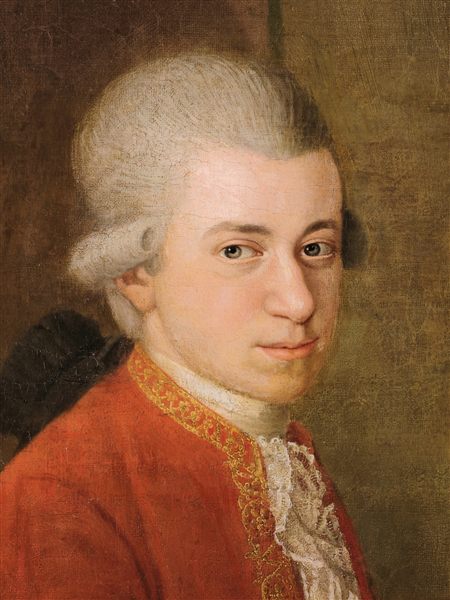
Wolfgang Amadeus Mozart was performing for European royalty as a young child and composing seriously before his teens, and by adulthood had written masterworks in essentially every genre the Classical era offered: symphony, concerto, string quartet, opera, and sacred choral music alike. Few composers in history have matched his combination of sheer fluency and consistency across so many different forms.
His Symphony No. 40 is a compact demonstration of everything the Classical era's balance and clarity could achieve, its urgent opening theme built from remarkably economical means. His operas, especially The Magic Flute, blend comedy, spectacle, and genuine emotional depth in a way few of his contemporaries could manage. His final work, the Requiem, was left unfinished at his death at 35 and completed by a student - a fact that's fed centuries of romantic myth-making about his death, most of it more legend than fact.
Mozart's music is often used as the clearest textbook example of Classical- era style precisely because he wrote so much of it, so well, in such a short life: his catalogue functions almost as a survey of the entire era.
Where to start listening: Symphony No. 40's first movement is urgent and immediately gripping; "Queen of the Night" from The Magic Flute shows off the era's vocal fireworks.