Instrument
Violin
The smallest and highest-pitched of the bowed strings - and the orchestra's principal melodic voice.
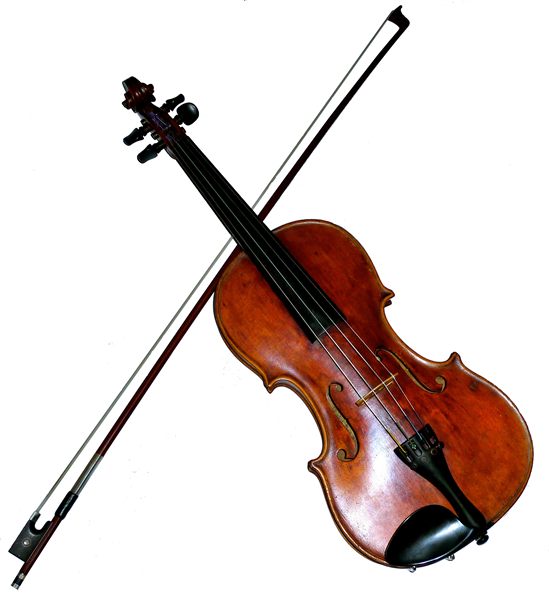
The violin is the smallest and highest-pitched member of the string family, held under the chin and played with a bow drawn across four strings. Its combination of range, expressive flexibility, and carrying power has made it the orchestra's leading melodic voice for roughly four centuries - more music has been written specifically for the violin than for almost any other instrument.
The instrument reached something close to its modern form in 16th-century Italy, and the violins built by Antonio Stradivari and Giuseppe Guarneri in the early-to-mid 18th century are still considered unmatched by many professional players, commanding enormous prices at auction and still in active use on concert stages today, over 300 years later.
In an orchestra, violins are split into two sections - first violins and second violins - usually seated closest to the conductor, and typically carry the primary melody more often than any other section. In a string quartet, two violins anchor the top of the texture above viola and cello.
Where to start listening: Vivaldi's The Four Seasons puts the violin in its most famous solo role; any Beethoven string quartet shows its ensemble voice.