Composer
Johann Sebastian Bach
The master of Baroque counterpoint, and the composer other composers study.
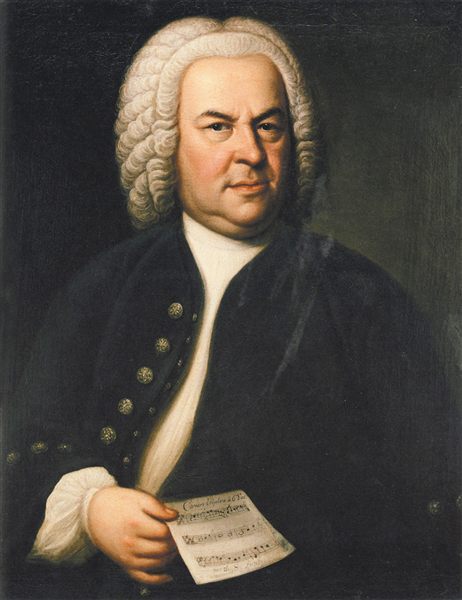
Johann Sebastian Bach spent most of his career as a working church musician in Germany, writing a steady stream of cantatas, organ music, and keyboard works for weekly services rather than for concert fame - he wasn't a celebrity in his own lifetime the way Handel was. His reputation as arguably the greatest composer in the Western tradition was built mostly after his death, as later generations rediscovered the sheer technical and expressive depth of his output.
That depth centers on counterpoint: the art of combining independent melodic lines so they lock together harmonically. Bach's fugues
- collected across two books of The Well-Tempered Clavier, one prelude and fugue in every major and minor key - are still the standard by which contrapuntal writing is measured. His Brandenburg Concertos show the same rigor applied to the Baroque concerto's soloist-versus-ensemble format, each one scored for a different, distinctive combination of instruments.
His Mass in B Minor, assembled and revised across decades, is one of the largest and most demanding choral works in the repertoire, drawing on Mass tradition but expanding it to a scale far beyond liturgical necessity. Despite writing almost exclusively functional, occasional music for the church and court he served, Bach's command of harmony and structure has made his work a foundational reference point for essentially every composer who followed him.
Where to start listening: the Brandenburg Concerto No. 3 is immediately energetic and approachable; the "Air on the G String" (from his Orchestral Suite No. 3) shows his quieter, more lyrical side.