Composer
Georges Bizet
The composer of Carmen, who died believing it had failed.
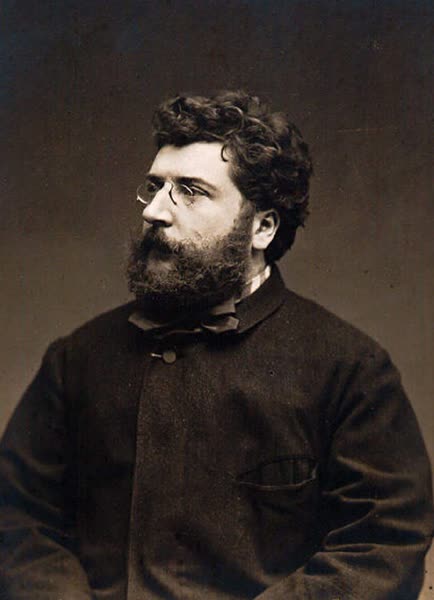
Georges Bizet wrote one of the most popular operas in the world - and died believing it had flopped. Carmen (1875), with its fiery heroine, unforgettable tunes, and tragic ending, has become one of the most performed operas of all time, but its composer lived only three months after its premiere.
Life in brief
Bizet was born in Paris in 1838 into a musical family and was so gifted that he entered the Paris Conservatoire just before his tenth birthday. A brilliant pianist, he wrote a sparkling Symphony in C at seventeen, then put it away; it was rediscovered only in the 1930s. In 1857 he won the Prix de Rome and spent several happy years in Italy.
Back in Paris, success came slowly. His opera The Pearl Fishers (1863) had a lukewarm reception, though its tenor-baritone duet is now famous. He married Geneviève Halévy, the daughter of his former teacher. His music for the play L'Arlésienne (1872) was more successful, especially in the concert suites he and others drew from it.
Carmen, premiered at the Opéra-Comique in 1875, shocked many in its audience: instead of a respectable heroine, it featured a free-spirited working woman, smugglers, and a murder onstage. The response was mixed, and Bizet, already in poor health, was crushed. He died suddenly in June 1875, aged just 36. Within months, Carmen was a triumph in Vienna, and it soon conquered the world.
Music and style
Bizet's music is vivid, melodic, and theatrical, with sharp rhythms and brilliant orchestral color. In Carmen he evoked Spain through dance rhythms such as the habanera and seguidilla, and he gave each character music that reveals who they are. His style combines French elegance and clarity with a directness and earthy realism that pointed toward the verismo opera of Puccini.
Key works
- Carmen (1875) - including the "Habanera," the "Toreador Song," and the "Seguidilla." See opera.
- The Pearl Fishers (1863) - with the duet "Au fond du temple saint."
- L'Arlésienne (1872) - incidental music, best known through its two orchestral suites, including a famous saxophone solo.
- Symphony in C (1855) - a fresh, youthful symphony written at seventeen.
- Jeux d'enfants ("Children's Games," 1871) - charming pieces for piano duet.
Legacy
Carmen was admired by composers who disagreed about almost everything else: Tchaikovsky predicted it would become the most popular opera in the world, and the philosopher Friedrich Nietzsche praised it as an antidote to Wagner. Its tunes are among the most recognized in all of classical music, and its heroine is one of the great roles for mezzo-soprano. See our voice types guide.
Where to start listening: the Prelude to Carmen and the "Habanera" are the perfect way in. Then try the Pearl Fishers duet, and the Symphony in C.