Composer
César Franck
The modest Paris organist whose late masterpieces inspired a generation.
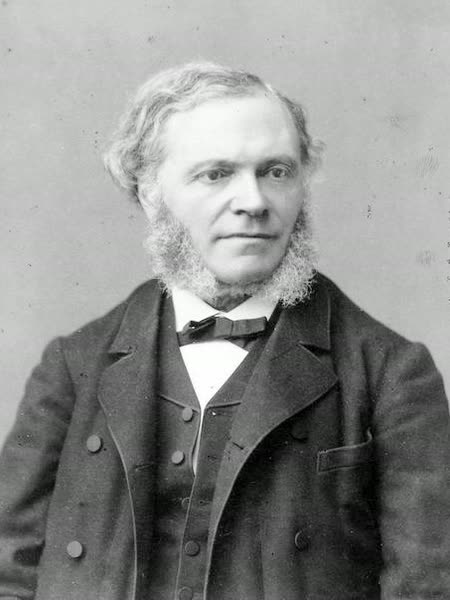
César Franck was a humble, hard-working church organist and teacher in Paris who wrote nearly all his greatest music after the age of fifty. His Violin Sonata, his Symphony in D minor, and his organ works are cornerstones of French music, and his pupils, who adored him, carried his ideals into the 20th century.
Life in brief
Franck was born in 1822 in Liège, in what is now Belgium. His ambitious father pushed him to become a touring piano prodigy, and the family moved to Paris, where he studied at the Conservatoire. But the virtuoso career never took off, and Franck eventually broke away from his father, earning a modest living as a teacher and church organist.
In 1858 he became organist of the new church of Sainte-Clotilde in Paris, which had a magnificent organ by the famous builder Aristide Cavaillé-Coll. He held the post for the rest of his life, and his improvisations there became famous. In 1872 he was appointed professor of organ at the Paris Conservatoire, where his classes in practice became lessons in composition.
Recognition as a composer came late, and often grudgingly. The masterpieces of his last decade, including the Piano Quintet, the Violin Sonata, and the Symphony, were not always well received at first. In 1890 he was struck by a horse-drawn omnibus in Paris, and he died later that year.
Music and style
Franck's music is rich, chromatic, and deeply expressive, with harmony that slides restlessly from key to key and a sound often shaped by the organ. He loved cyclic form, in which themes from one movement return in later movements, binding the whole work together, as in the Violin Sonata and the Symphony. His music combines German weight, influenced by Bach, Beethoven, and Wagner, with French warmth.
Key works
- Violin Sonata in A major (1886) - written as a wedding present for the great violinist Eugène Ysaÿe, it is one of the finest violin sonatas ever written. See sonata.
- Symphony in D minor (1888) - his only symphony, with a famous English horn melody in its slow movement. See symphony.
- Panis angelicus (1872) - a serene hymn for voice, a favorite of tenors and choirs.
- Prélude, Choral et Fugue (1884) - a grand piano work in the spirit of Bach. See fugue.
- Piano Quintet in F minor (1879) - passionate and turbulent.
- Symphonic Variations (1885) - for piano and orchestra.
He also wrote superb music for the organ, including his Three Chorales (1890), completed just before his death.
Legacy
Franck's pupils, among them Vincent d'Indy, Ernest Chausson, and Henri Duparc, formed a devoted circle and spread his influence through French music. His Violin Sonata is a staple of every violinist's repertoire. See also the Romantic era.
Where to start listening: the Violin Sonata in A major, especially its glorious canon-like finale, then Panis angelicus and the Symphony in D minor.