Composer
Johannes Brahms
A Romantic who built his symphonies on Classical-era discipline.
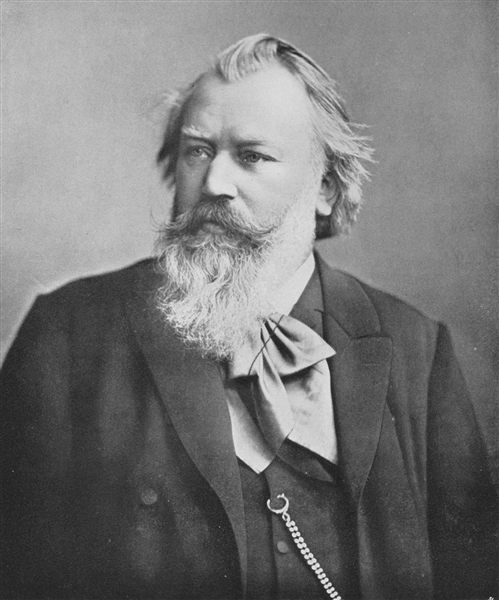
Johannes Brahms carried Romantic-era emotional weight inside tightly disciplined, Classically-influenced structures, at a moment when much of European music was moving toward looser, more programmatic forms. He felt the pressure of that inheritance directly - famously delaying his first symphony for over a decade, reportedly remarking on hearing "the tread of a giant" (Beethoven) behind him the whole time.
His Symphony No. 4 is often held up as a model of how tightly a Romantic-era symphony can be argued, closing with a passacaglia: a Baroque-era technique built on a repeating bass pattern, showing Brahms reaching back centuries for structural discipline even while writing squarely Romantic material. His Hungarian Dances, by contrast, are lighter, folk-influenced showpieces that became some of his most widely popular work.
Brahms also wrote extensively for chamber ensembles and solo piano, and is frequently grouped with Bach and Beethoven as the "Three Bs" - a testament to how seriously his contemporaries took his structural rigor.
Where to start listening: Hungarian Dance No. 5 is immediate and energetic; Symphony No. 4's finale shows his more demanding, architectural side.