Composer
Richard Wagner
Opera stretched to its most ambitious, continuous, and influential extreme.
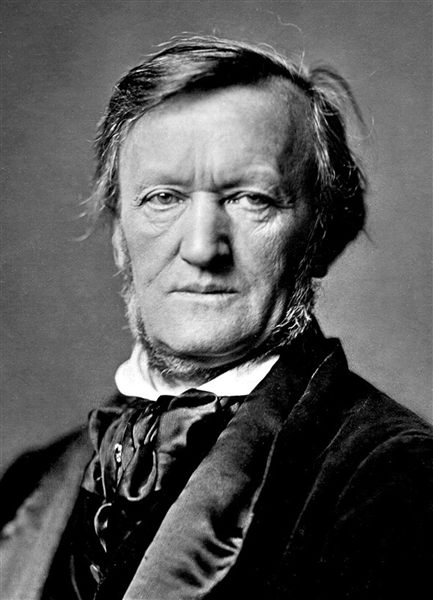
Richard Wagner treated opera as something closer to total, continuous musical drama than a sequence of separate arias and recitatives, and pursued that vision at an almost unmatched scale
- his four-opera Ring Cycle runs roughly fifteen hours across four full evenings, telling a single continuous mythological story.
His most consequential technical contribution is the leitmotif: a short musical theme tied to a specific character, object, or idea, woven throughout a score and transformed as the story develops. That technique traveled directly into 20th-century film scoring
- composers like John Williams use it constantly, in a direct, traceable line back to Wagner's operas.
His opera Tristan und Isolde opens with a famously unresolved chord (the "Tristan chord") that many historians treat as a pivotal moment in the slow erosion of traditional tonal harmony, opening a path that would eventually lead to Schoenberg's break from tonality altogether decades later.
Where to start listening: the "Ride of the Valkyries" from the Ring Cycle is Wagner's most recognizable excerpt; the Prelude to Tristan und Isolde rewards a slower, more patient listen.