Composer
Pyotr Ilyich Tchaikovsky
Russia's most internationally beloved Romantic-era composer.
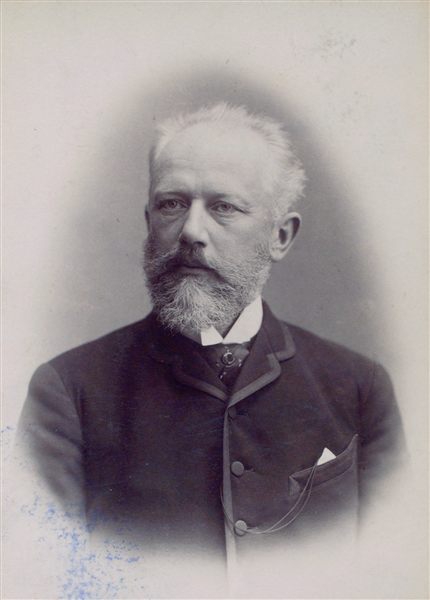
Pyotr Ilyich Tchaikovsky combined sweeping, emotionally direct Romantic-era melody with a distinctly Russian sensibility, and became, in the process, one of the most internationally popular composers the era produced - his music travels well outside the concert hall, into ballet, film, and popular culture, more successfully than almost any of his contemporaries.
Life in brief
Tchaikovsky was born in 1840 in Votkinsk, a mining town in the Ural region of Russia. He loved music as a child, but his family steered him toward a safe career: he trained in law and became a clerk in the Ministry of Justice. In his early twenties he enrolled at the newly founded St Petersburg Conservatory, graduated among its first students, and was soon teaching at the new Moscow Conservatory.
For thirteen years his career was supported by a wealthy widow, Nadezhda von Meck, who sent him a generous yearly allowance; the two exchanged more than a thousand letters but agreed never to meet. His private life was troubled. Tchaikovsky was gay, in a society that condemned it, and a hasty marriage in 1877 collapsed within weeks, leaving him close to breakdown.
Success grew steadily, and by the 1880s he was internationally famous, conducting his own music across Europe - and, in 1891, at the opening festivities of New York's Carnegie Hall. He died in St Petersburg in 1893, just nine days after conducting the premiere of his Sixth Symphony. The official cause was cholera; other theories have circulated ever since, but none has been proven.
Music and style
Tchaikovsky's great gift was melody - long, aching, unforgettable tunes - and he set them in brilliant, colorful orchestration. His music wears its heart on its sleeve, swinging between elegance and despair, and it has a natural theatrical flair: even his symphonies feel like dramas. He drew on Russian folk music, but he also loved Mozart and the Western European tradition, and his style bridges the two worlds.
Key works
- Ballets - Swan Lake (1877), The Sleeping Beauty (1890), and The Nutcracker (1892). His three great ballets are the works most people encounter first, and remain core repertoire for ballet companies worldwide; The Nutcracker in particular has become inseparable from Christmas season programming across much of the world.
- 1812 Overture (1880) - written to commemorate Russia's defense against Napoleon's invasion, a concert-hall spectacle complete with real cannon fire in some performances.
- Piano Concerto No. 1 (1875) - harshly criticized at first by the pianist he had hoped would premiere it, then premiered to acclaim in Boston, and now one of the most popular concertos ever written.
- Violin Concerto (1878).
- Symphonies Nos. 4, 5, and 6 - the last, the "Pathétique," ends not in triumph but in a slow, despairing fade.
- Romeo and Juliet - a fantasy overture with one of music's most famous love themes.
- Eugene Onegin - his most performed opera.
Legacy
Tchaikovsky wrote extensively for the concert hall beyond ballet - symphonies, concertos, and chamber music - but it's his gift for immediate, vivid, danceable melody that has made his music some of the most widely performed and recognized in the entire Romantic repertoire. He also transformed ballet music from mere accompaniment into symphonic art, paving the way for later ballet composers such as Stravinsky and Prokofiev.
Where to start listening: the "Waltz of the Flowers" from The Nutcracker is warm and instantly familiar; the 1812 Overture's ending is the genre's most spectacular single moment. For his deepest side, try the finale of the "Pathétique."