Composer
Clara Schumann
One of the greatest pianists of the 19th century - and a composer to rediscover.
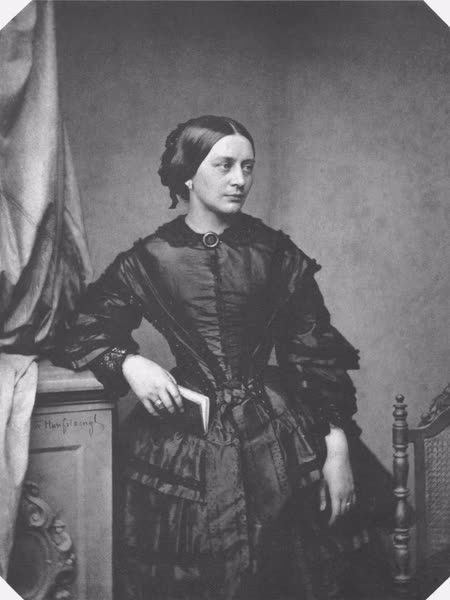
Clara Schumann was one of the most celebrated performers of the 19th century, a pianist who toured Europe for more than sixty years and helped invent the modern piano recital. She was also a fine composer, the wife and champion of Robert Schumann, and the closest friend of Brahms.
Life in brief
Clara Wieck was born in Leipzig in 1819. Her father, Friedrich Wieck, a demanding piano teacher, set out to make her a star: he controlled her training, her diary, and her career, and she made her debut at the Leipzig Gewandhaus at the age of nine. By her teens she was famous across Europe, admired by Chopin, Liszt, and Mendelssohn, and honored with the title of Royal and Imperial Chamber Virtuoso in Vienna.
Robert Schumann, one of her father's pupils, fell in love with her, and when Wieck bitterly opposed their marriage, the couple took him to court. They won, and married in 1840, the day before her twenty-first birthday. Over the next fourteen years Clara had eight children while continuing to perform, compose, and promote Robert's music.
In 1854 Robert suffered a breakdown and was taken to an asylum, where he died two years later. Clara, now supporting a large family alone, returned to full-time touring, and the young Brahms became her lifelong friend and confidant. She later taught at a conservatory in Frankfurt, gave her final concert in 1891, and died in Frankfurt in 1896.
Music and style
Clara composed mostly before Robert's death: piano pieces, songs, chamber music, and a concerto. Her music is lyrical and richly textured, written by someone who knew the piano intimately. She doubted herself, writing in her diary in 1839 that "a woman must not desire to compose - there has never yet been one able to do it," and after 1856 she almost stopped, devoting herself to performing and editing Robert's works.
As a pianist she was revolutionary. She was among the first to play from memory, she built programs around serious works by Bach, Beethoven, and Chopin rather than flashy showpieces, and she introduced much of Robert's and Brahms's music to the public.
Key works
- Piano Concerto in A minor, Op. 7 (1835) - begun when she was thirteen, and premiered with Mendelssohn conducting. See concerto.
- Piano Trio in G minor, Op. 17 (1846) - her largest chamber work, and one of her finest.
- Three Romances for Violin and Piano, Op. 22 (1853) - tender pieces written for the great violinist Joseph Joachim.
- Variations on a Theme by Robert Schumann, Op. 20 (1853) - a birthday gift for Robert, on a theme Brahms would also take up. See theme and variations.
- Songs, including "Liebst du um Schönheit," three of which were included in Robert's song collection Liebesfrühling. See art song.
Legacy
For a long time Clara was remembered chiefly as Robert's wife and Brahms's muse, but her playing shaped the way we hear Romantic piano music, and her compositions are now regularly performed and recorded. From 1989 to 2002 her portrait appeared on Germany's 100-mark banknote. See also Fanny Mendelssohn, another great woman composer of the age.
Where to start listening: the Three Romances, Op. 22 are a perfect introduction. Then try the Piano Trio in G minor and the Piano Concerto.