Musical Form
Etude
A practice piece for a single technical challenge - that became a concert showpiece.
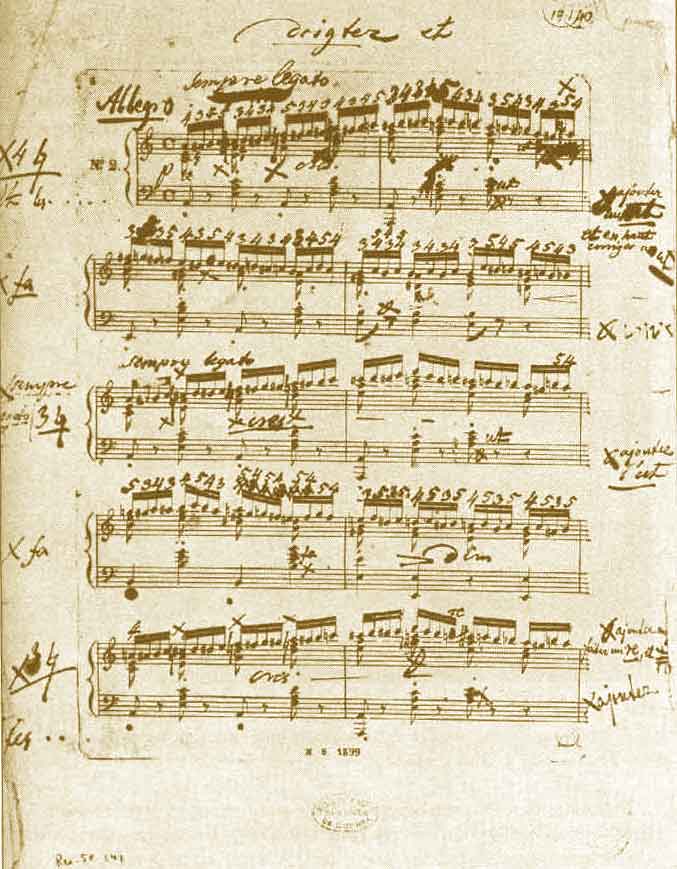
Solo / Keyboard
An etude ("study" in French) is a short piece built around a single technical challenge - rapid octaves, fast repeated notes, wide leaps, independent finger movement - meant to isolate and develop one specific skill through repetition.
Etudes started as practical teaching tools, but Romantic-era composers, especially Frederic Chopin and Franz Liszt, transformed the genre: their etudes are demanding enough to build real technique, but also musically substantial enough to be performed as concert repertoire in their own right, not just practiced in private. Purely pedagogical etudes didn't disappear, though - composer-teachers like Carl Czerny wrote enormous numbers of drilling exercises for students that were never intended for the concert stage, which is the tradition Chopin and Liszt were reacting against and elevating.
Later composers kept pushing the concert-etude idea further still. Liszt's Transcendental Etudes pair extreme technical demands with programmatic titles and orchestral-scale drama, while Debussy's and Rachmaninoff's etudes (the latter titled Études-tableaux, or "picture studies") lean more toward tone-color and mood than raw technical display, showing how far the form had drifted from its practice-room origins by the early 20th century.
Where to start listening: Chopin's "Revolutionary" Etude (Op. 10, No. 12) pairs a technical workout (rapid left-hand runs) with real dramatic weight. Liszt's "La Campanella," modeled on a Paganini violin theme, shows the concert-etude tradition at its most virtuosic.