Musical Form
Rhapsody
A free-form, episodic piece that follows mood rather than a fixed structure.
Orchestral / Solo
A rhapsody is a piece, for orchestra or solo instrument, that deliberately avoids the fixed structural templates (sonata form, the multi-movement symphony layout) that govern most other classical forms. Instead, it moves through a sequence of contrasting sections and moods, held together more by emotional flow and often by folk or national musical material than by formal architecture.
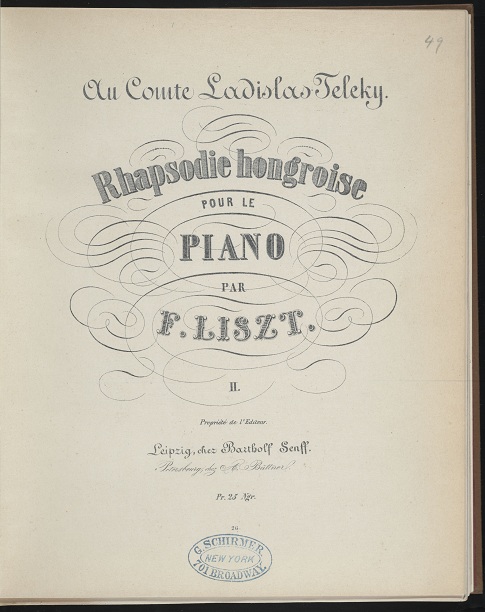
Franz Liszt's Hungarian Rhapsodies, drawing on Hungarian and Romani folk melodies, established the genre in the Romantic era. The idea carried well into the 20th century - George Gershwin's Rhapsody in Blue applies the same free, episodic logic to a fusion of orchestral music and jazz.
The word itself comes from the Greek rhapsoidein, describing how ancient epic poems were "stitched together" and recited in sections by a performer - an image that fits the genre well, since a rhapsody typically feels like several loosely related episodes strung one after another rather than one continuous musical argument. Brahms also wrote rhapsodies, though his (for solo piano) are more tightly constructed and brooding than Liszt's showier, folk-inflected examples, showing how much range the label actually covers.
Where to start listening: Rachmaninoff's Rhapsody on a Theme of Paganini (technically a set of variations, but rhapsodic in spirit) and Gershwin's Rhapsody in Blue both show how flexible the genre can be.