Musical Form
Nocturne
A quiet, lyrical piece evoking the mood of night.
Solo / Keyboard
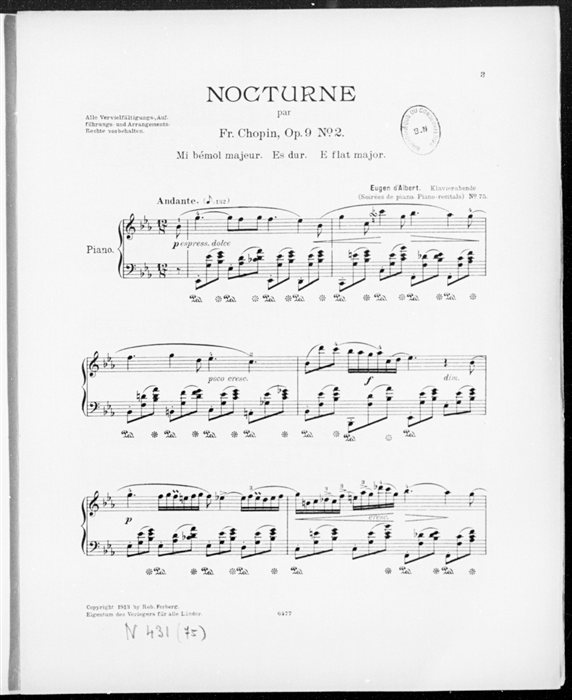
A nocturne ("night piece") is typically a solo piano work with a slow tempo, a singing, lyrical melody over a flowing accompaniment, and a generally reflective, dreamlike mood evoking nighttime. It's less a strict form than a mood and character - there's no required structure the way there is for a fugue or sonata-form movement.
The Irish composer John Field is credited with inventing the genre in the early 1800s, but it's Frederic Chopin who perfected it and made it famous: his 21 nocturnes are among the most beloved works in the solo piano repertoire, prized for their intimate, songlike melodies. The texture Chopin favored - a steady, often arpeggiated left-hand accompaniment supporting a freely ornamented, voice-like right-hand melody - borrows directly from Italian bel canto opera, and part of the nocturne's lasting appeal is exactly that operatic sense of a single singer performing alone.
Later composers kept the mood while stretching the form: Debussy's orchestral Nocturnes apply the same nighttime atmosphere to a full orchestra rather than solo piano, and Gabriel Fauré wrote a substantial set of his own piano nocturnes that lean more harmonically adventurous than Chopin's.
Where to start listening: Chopin's Nocturne in E-flat major, Op. 9, No. 2 is the genre's single most recognizable piece - a good introduction to both the nocturne and to Chopin generally.