Composer
Christoph Willibald Gluck
The reformer who made opera serve the drama.
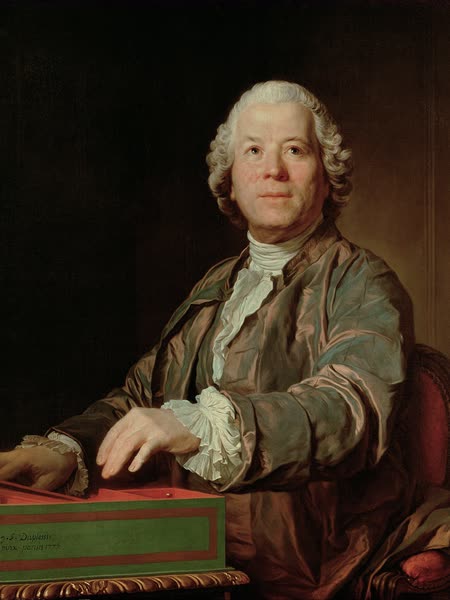
Christoph Willibald Gluck was the great reformer of 18th-century opera. At a time when operas were often strings of showpieces for star singers, he set out to make music serve the drama, with simple, noble melodies, expressive choruses, and stories told directly and movingly. His Orfeo ed Euridice is one of the oldest operas still regularly performed.
Life in brief
Gluck was born in 1714 in Erasbach, in the Upper Palatinate region of Bavaria, the son of a forester. Against his father's wishes he chose music, studying in Prague and then in Milan, where he wrote his first operas in the fashionable Italian style. He traveled widely - to London, where he met Handel, and across Germany with a touring opera troupe - before settling in Vienna, where he had married a wealthy merchant's daughter in 1750. He soon became music director at the court theatres.
In Vienna, working with the poet Ranieri de' Calzabigi, he created his "reform" operas: Orfeo ed Euridice (1762) and Alceste (1767), whose published preface became a manifesto for a new kind of opera. Among his pupils was the young archduchess Marie Antoinette, and after she married the heir to the French throne she supported his move to Paris. There, between 1774 and 1779, he triumphed with a series of French operas, and sparked a famous public quarrel between his supporters and those of the Italian composer Niccolò Piccinni. After a stroke he retired to Vienna, where he died in 1787.
Music and style
In the preface to Alceste, Gluck declared that he wanted to free opera from the "abuses" of singers' vanity and composers' excess, and to restrict music "to its true office of serving poetry." In practice, that meant dropping long, repetitive arias and endless vocal decoration; blending recitative, aria, chorus, and dance into continuous scenes; using the overture to prepare the drama; and writing melodies of noble simplicity. His orchestra became a full partner in the storytelling.
Key works
- Orfeo ed Euridice (1762, revised for Paris in 1774) - the myth of Orpheus, who descends to the underworld to rescue his wife. See opera.
- "Dance of the Blessed Spirits" - a serene ballet from Orfeo, with a famous flute solo.
- "Che farò senza Euridice" - Orfeo's heartbroken lament, "What shall I do without Eurydice?"
- Alceste (1767) - a tragedy of a queen who offers her life for her husband's, with its famous reforming preface.
- Iphigénie en Tauride (1779) - often considered his masterpiece, with a thrilling storm opening.
- Armide (1777) - a sorceress's tale of love and magic.
Legacy
Gluck's ideas shaped opera for a century. Mozart knew his works well, Berlioz worshipped him, and Wagner's vision of opera as unified music drama follows directly from Gluck's reforms. See also the Classical era.
Where to start listening: the "Dance of the Blessed Spirits," then Orfeo's lament "Che farò senza Euridice."