Composer
George Frideric Handel
A German composer who became England's adopted musical celebrity.
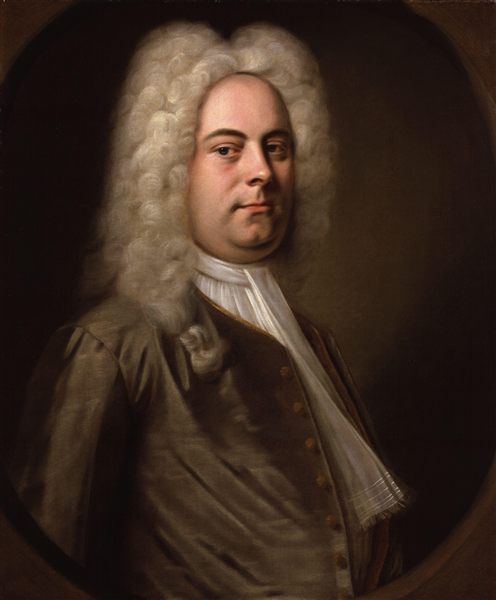
Born in Germany the same year as Bach, George Frideric Handel took a very different career path: after early success writing Italian opera, he moved to London and became, in effect, England's most celebrated composer, enjoying the kind of public fame and royal patronage Bach never had. His skill at reading an audience and writing music built to impress large public crowds shaped everything he wrote.
Life in brief
Handel was born in Halle in 1685. His father, a barber-surgeon, wanted him to become a lawyer, and Handel briefly studied law before music won out. As a young man he played in the opera orchestra in Hamburg - where a quarrel with a fellow musician turned into a sword duel, and Handel was reportedly saved only when his opponent's blade struck a coat button.
He spent several formative years in Italy, mastering the Italian style and scoring a triumph with his opera Agrippina in Venice in 1709. After a brief post at the court of Hanover, he arrived in London, where his opera Rinaldo (1711) was a sensation, and he soon settled there for good. In a twist of fortune, his former employer in Hanover became King George I of Britain in 1714. Handel became a British subject in 1727, and that year wrote Zadok the Priest for the coronation of George II.
For two decades he ran Italian opera companies in London, writing dozens of operas built around star singers. When the fashion for Italian opera faded, he reinvented himself, turning to the English-language oratorio - and found his greatest success. In later life he went blind, and when he died in 1759 he was buried in Westminster Abbey, with some 3,000 mourners attending.
Music and style
Handel's music is outward-facing, grand, and built to be heard by (and please) a large audience rather than serve a liturgical function alone. Where Bach worked mostly inside the church, Handel worked mostly for the public and the crown. His style is direct and theatrical: broad, memorable melodies, thrilling choruses, and a superb sense of timing, honed by years in the opera house. He also borrowed freely, reusing and reworking his own earlier music and sometimes other composers', as was common at the time.
Key works
- Messiah (1742) - his oratorio on the life of Christ, composed in about three weeks, remains one of the most frequently performed works in the entire choral repertoire. Its "Hallelujah" chorus is instantly recognizable even to listeners who don't otherwise know classical music at all.
- Water Music (1717) and Music for the Royal Fireworks (1749) - both written for lavish royal outdoor occasions. A public rehearsal of the Fireworks music reportedly drew some 12,000 people and jammed traffic on London Bridge.
- Zadok the Priest (1727) - a coronation anthem sung at every British coronation since.
- Giulio Cesare (1724) - the best known of his Italian operas.
- Other oratorios - including Israel in Egypt, Samson, and Judas Maccabaeus.
- "Ombra mai fù" - the gentle opening aria from his opera Serse, often heard as "Handel's Largo."
Legacy
Handel never fell out of fashion in Britain the way Bach did in Germany: from 1750 he gave annual performances of Messiah to benefit London's Foundling Hospital, and it has stayed in the repertoire ever since. His ceremonial music still carries its celebratory function, showing up at weddings, graduations, and state occasions centuries later. Beethoven is said to have considered him the greatest composer who ever lived, and his oratorios created a tradition of large-scale choral singing that remains central to British musical life.
Where to start listening: the "Hallelujah" chorus from Messiah is the obvious starting point; Music for the Royal Fireworks is a celebratory, purely orchestral alternative. For Handel at his most tender, try "Ombra mai fù."