Musical Form
Art Song (Lied)
A poem set to music for a single singer and piano.
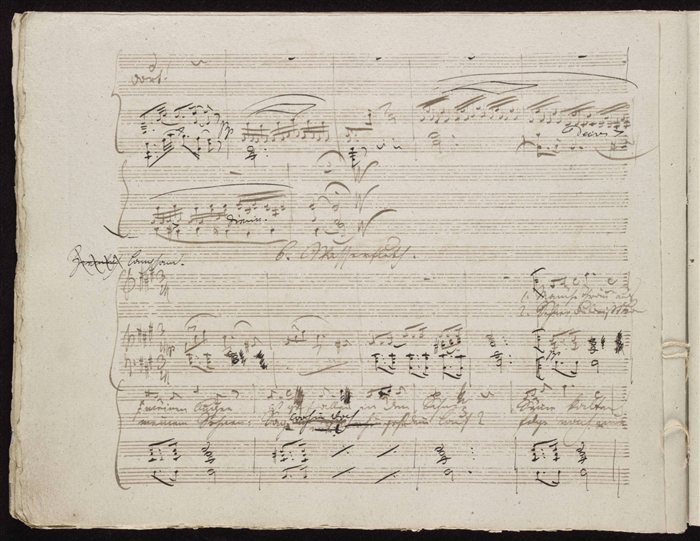
Vocal / Solo
An art song - called a Lied (plural Lieder) in the German tradition where the genre flourished most - sets a single poem to music for one voice and piano. Unlike opera or oratorio, there's no drama being acted out and no chorus; the entire piece is built to serve one poem and the emotional world inside it, with the piano treated as an equal partner to the voice rather than mere accompaniment.
How an art song works
In good art-song writing, the piano part often engages in word-painting - a rippling accompaniment for a text about water, a halting rhythm for hesitation - reinforcing the poem's imagery rather than simply supporting the vocal line harmonically. Some songs are strophic, repeating the same music for each verse like a folk song; others are through-composed, with new music following the story from start to finish, as in Schubert's Erlkönig.
Art song is usually performed in a recital by a singer and pianist working as true partners, and the great Lieder pianists are celebrated as much as the singers.
The German Lied
Franz Schubert is the genre's central figure, having written well over 600 songs that established the Lied as a serious concert form in its own right. He drew on the great poets of his day, especially Goethe, and wrote two of the greatest song cycles - a connected sequence of Lieder unified by a single poet, story, or theme: Die schöne Müllerin (1823) and Winterreise (1827). Beethoven had written one of the first, An die ferne Geliebte ("To the Distant Beloved," 1816).
Composers after him, including Schumann and Brahms, carried the tradition on; Schumann's Dichterliebe, setting poems by Heinrich Heine, is a masterpiece of the form. Hugo Wolf brought a new psychological intensity, and Mahler and Richard Strauss expanded the song to full orchestra, ending with Strauss's radiant Four Last Songs.
The French mélodie and beyond
France developed a close parallel tradition, the mélodie, which Fauré and Debussy shaped around the particular rhythms and sounds of French poetry rather than borrowing the German model directly; the two traditions share a form but sound distinctly different because of the languages driving them. Henri Duparc and Francis Poulenc added classics of their own.
Other countries built their own song traditions: Mussorgsky and Rachmaninoff in Russia - Rachmaninoff's wordless Vocalise is famous - Ralph Vaughan Williams and Britten in England, and in the United States Copland's Old American Songs and Samuel Barber's Knoxville: Summer of 1915.
Famous art songs
- Schubert - Erlkönig and Gretchen am Spinnrade.
- Schubert - Winterreise (1827).
- Schumann - Dichterliebe (1840).
- Brahms - Wiegenlied ("Lullaby").
- Strauss - Four Last Songs (1948).
- Fauré - Après un rêve.
Where to start listening: Schubert's "Ave Maria" is the genre's most widely known single song; his song cycle Winterreise rewards a full, attentive listen for its unified emotional arc. For drama in four minutes, try Erlkönig.