Musical Form
Symphony
A large-scale, multi-movement work for full orchestra.
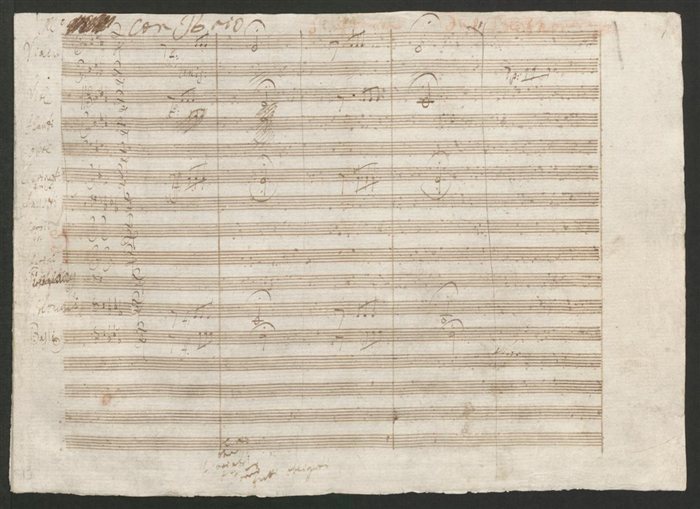
Orchestral
A symphony is a substantial work for full orchestra, almost always built from several distinct sections called movements - typically four, though this varies. It's the flagship form of orchestral music: when people picture "classical music" in the abstract, they're often picturing a symphony.
The standard four-movement layout, established in the Classical era, runs roughly: a fast, dramatic opening movement (often in sonata form - see below); a slower, lyrical second movement; a dance-like third movement (originally a minuet, later often a scherzo); and a fast, energetic finale that resolves the whole work.
That opening movement's structure - sonata form - is worth understanding on its own, since it recurs constantly: two contrasting musical themes are introduced, then developed and pulled through harmonic tension, then brought back and resolved. Grasping that one pattern unlocks an enormous share of the symphonic repertoire.
The symphony's scale grew dramatically over time. Haydn's early symphonies run 15–20 minutes with a modest-sized orchestra; by the Late Romantic era, Mahler's symphonies could run over an hour and call for enormous forces, including extra brass, expanded percussion, and sometimes chorus and vocal soloists.
Where to start listening: Beethoven's Symphony No. 5 is the most famous entry point - four notes that turn into forty minutes of architecture. Mozart's Symphony No. 40 shows the same form at a more intimate Classical-era scale.