Composer
Samuel Barber
The American lyricist whose Adagio for Strings became an anthem of mourning.
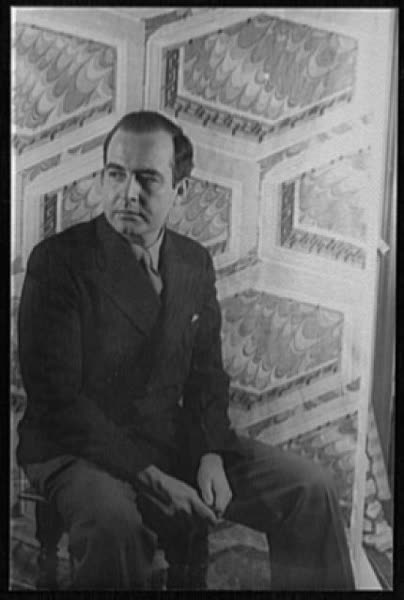
Samuel Barber was one of the most performed American composers of the 20th century, and his Adagio for Strings is among the most famous pieces of American music ever written. At a time when many composers were turning to dissonance and experiment, Barber kept faith with melody, writing music of warm, lyrical, often melancholy beauty.
Life in brief
Barber was born in 1910 in West Chester, Pennsylvania, into a comfortable family; his aunt was a well-known opera singer. At nine he left his mother a note confessing that he was "meant to be a composer," and begging her not to make him "go and play football." At fourteen he entered the newly founded Curtis Institute of Music in Philadelphia, where he studied composition, piano, and singing. There he met the Italian composer Gian Carlo Menotti, who became his partner for decades.
Success came early. In 1938 the conductor Arturo Toscanini premiered his Adagio for Strings in a nationwide radio broadcast, and it quickly became famous. Barber went on to write concertos, songs, piano music, and operas, and won the Pulitzer Prize twice: for his opera Vanessa (1958), with a libretto by Menotti, and for his Piano Concerto (1962).
His career suffered a blow in 1966, when his opera Antony and Cleopatra, commissioned to open the new Metropolitan Opera house at Lincoln Center, was poorly received. He composed less in his last years and died in New York in 1981.
Music and style
Barber's music is lyrical, expressive, and broadly Romantic in feeling, with long singing melodies and rich harmony, though he could also write with modern bite and energy. He was a fine singer himself, and his gift for the voice shows in his many songs. He was largely independent of musical fashions - which is one reason his music has always found an audience.
Key works
- Adagio for Strings (1936) - originally the slow movement of his string quartet, arranged for string orchestra. It was broadcast after the death of President Franklin D. Roosevelt in 1945 and has been heard at moments of public mourning ever since.
- Violin Concerto (1939 - 1940) - lyrical and tender, ending with a breathless, virtuosic finale. See violin.
- Knoxville: Summer of 1915 (1947) - a nostalgic setting of a prose poem by James Agee for soprano and orchestra.
- Vanessa (1958) - his Pulitzer Prize-winning opera.
- Piano Concerto (1962) - written for the pianist John Browning.
- Agnus Dei (1967) - his own choral arrangement of the Adagio.
- Piano Sonata (1949) - premiered by Vladimir Horowitz.
Legacy
The Adagio for Strings has become a universal language of grief and remembrance, heard in films such as Platoon and at memorials around the world. Barber's songs, concertos, and choral music remain central to the American repertoire, and his lyrical voice has influenced generations of composers and film composers.
Where to start listening: the Adagio for Strings is the essential first listen. Then try the Violin Concerto's first movement and Knoxville: Summer of 1915.