Composer
Gustav Mahler
The Romantic symphony expanded to its largest possible scale.
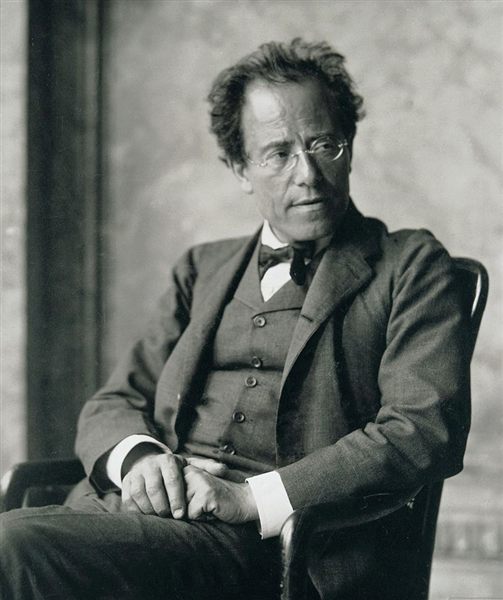
Gustav Mahler spent most of his career as a celebrated conductor, and composed largely in the summer months between conducting seasons - yet still produced some of the Late Romantic era's most ambitious symphonies, routinely expanding the form's length, orchestral forces, and emotional scope well beyond what earlier composers had attempted.
His Symphony No. 2, nicknamed the "Resurrection," runs well over an hour and calls for an enormous orchestra plus chorus and vocal soloists, building toward a massive choral finale confronting death and resurrection directly. That willingness to treat the symphony as a vehicle for the biggest possible questions - life, death, meaning
- is characteristic of his output generally.
Mahler's music sat at the edge of what Romantic-era harmony could support, and his influence runs directly into the 20th-century Modernist composers who followed him, including Schoenberg, who considered him a direct predecessor.
Where to start listening: the finale of Symphony No. 2 is a genuinely overwhelming full-scale introduction; his Symphony No. 1's third movement (a minor-key take on "Frere Jacques") is a stranger, shorter starting point.