Composer
Ralph Vaughan Williams
The folk-song collector who gave English music its pastoral voice - and its symphonies.
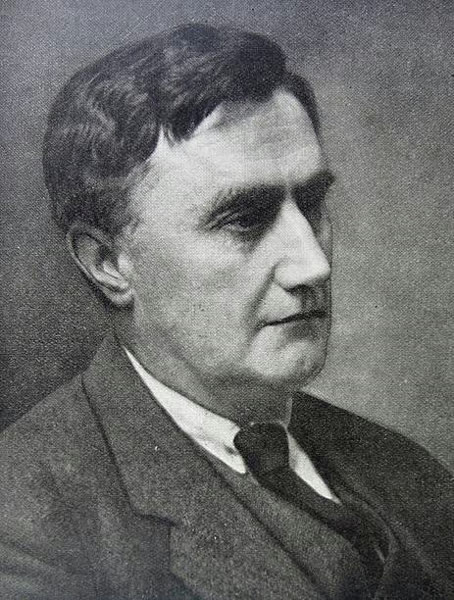
Ralph Vaughan Williams did more than anyone to give 20th-century English music its own voice. Drawing on English folk song, Tudor church music, and hymns, he created a sound that many people hear as the essence of the English landscape - and yet his nine symphonies range from serene beauty to violent, troubled modernity. (His name is pronounced "Rafe.")
Life in brief
Vaughan Williams was born in 1872 in the village of Down Ampney, in Gloucestershire, the son of a vicar; through his mother he was related to the Darwin and Wedgwood families. He studied at the Royal College of Music and Cambridge, then with Max Bruch in Berlin and, in his mid-thirties, with Maurice Ravel in Paris. At the Royal College he met Gustav Holst, who became his closest friend and most trusted critic.
From 1903 he traveled the English countryside collecting folk songs from elderly singers before they disappeared, eventually noting down hundreds. He also edited The English Hymnal (1906), writing new tunes for it and introducing folk melodies into church singing. The Fantasia on a Theme by Thomas Tallis (1910) made his name as a composer.
When the First World War broke out he was over forty, but he enlisted, serving as an ambulance orderly in France and later as an artillery officer. The war changed him and his music: his "Pastoral" Symphony is less a country idyll than a quiet elegy for the fallen. He continued composing into his eighties, completing his Ninth Symphony shortly before his death in London in 1958. He is buried in Westminster Abbey, near Purcell.
Music and style
Vaughan Williams's music draws on the modal scales of folk song and Tudor music, giving it a timeless, open quality. Rich string textures, soaring melodies, and broad, hymn-like themes are typical - but so are anger and dissonance, as in his ferocious Fourth Symphony. He believed music should belong to everyone, and wrote for amateurs, choirs, and church congregations as well as the concert hall.
Key works
- The Lark Ascending (1914, revised 1920) - a rhapsody for violin and orchestra, regularly voted Britain's favorite piece of classical music.
- Fantasia on a Theme by Thomas Tallis (1910) - a luminous work for string orchestra, built on a psalm tune by Thomas Tallis.
- Fantasia on Greensleeves (1934) - his famous arrangement of the old English tune.
- Nine symphonies, from A Sea Symphony (1910) to the Ninth (1958), including the radiant Fifth.
- Five Variants of Dives and Lazarus - variations on a folk tune for strings and harp.
- Hymn tunes - including "Sine Nomine," sung to "For All the Saints."
- Film scores - including Scott of the Antarctic, later reworked as his Sinfonia antartica.
Legacy
Vaughan Williams's revival of folk song and Tudor music shaped English music for generations. His hymn tunes are still sung in churches around the English-speaking world, and The Lark Ascending has reached an enormous new audience through radio and film.
Where to start listening: The Lark Ascending is the essential first listen - fifteen minutes of pure, soaring calm. Then try the Fantasia on a Theme by Thomas Tallis for its rich, resonant strings.