Composer
Arnold Schoenberg
The composer who broke music free from its home key entirely.
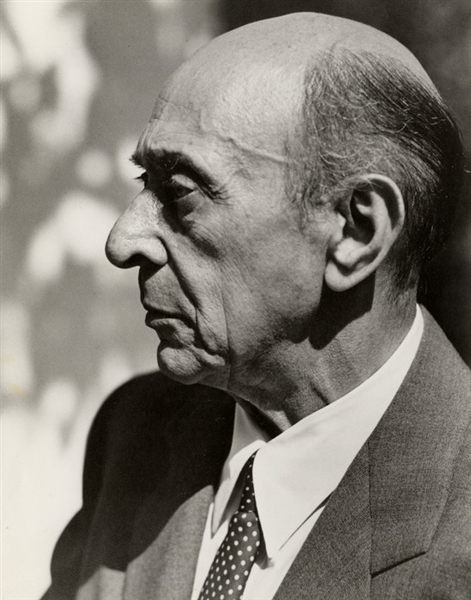
Arnold Schoenberg began his career writing lushly Late Romantic music and ended it as the composer most responsible for breaking Western music free from tonality - the sense of a home key that music resolves back to - a shift so consequential it reshaped what "classical composition" could even mean afterward.
Verklarte Nacht ("Transfigured Night"), an early work for string sextet, still sits inside the Late Romantic tradition, showing how firmly Schoenberg's roots were planted in the same soil as Mahler and Richard Strauss. Pierrot Lunaire, written a decade or so later, shows him already deep into atonal territory, using a vocal technique halfway between speech and song. He later formalized his break from tonality into the twelve-tone technique, treating all twelve chromatic notes as equals with no single note allowed to dominate as a tonal center.
Schoenberg's influence extended far beyond composers who adopted his specific twelve-tone method - simply by demonstrating that tonality itself was optional, he opened the door to the wide range of harmonic experimentation that followed across the rest of the 20th century.
Where to start listening: Verklarte Nacht is the gentler entry point, still clearly Romantic in sound; Pierrot Lunaire is the more demanding, fully atonal next step.