Composer
John Williams
The composer who brought the Late Romantic orchestral sound to the multiplex.
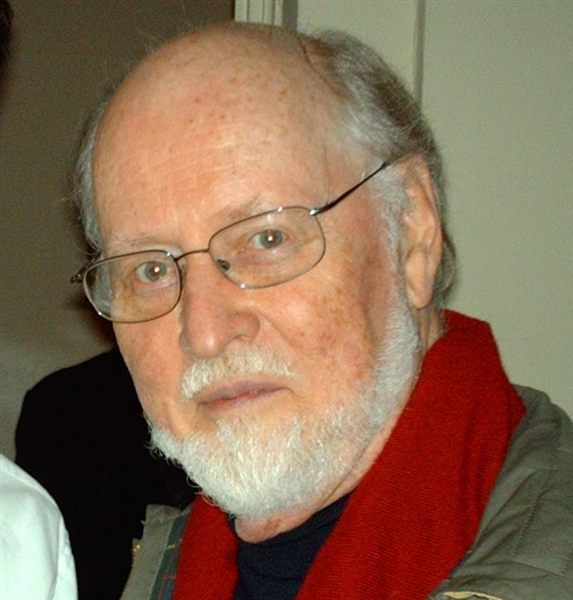
John Williams is, by a wide margin, the most widely heard living composer working in the classical orchestral tradition - his film scores have introduced the sound of the full symphony orchestra to a far larger audience than the concert hall alone ever could. His music draws directly on the Late Romantic orchestral language of Wagner and Richard Strauss, including the leitmotif technique - short recurring themes tied to specific characters or ideas - which he uses extensively across his best-known scores.
Life in brief
Williams was born in 1932 in Floral Park, New York, the son of a jazz drummer, and moved with his family to Los Angeles as a teenager. After studying music in Los Angeles and serving in the US Air Force, where he arranged music for military bands, he studied piano at the Juilliard School in New York and played jazz piano in the city's clubs.
Back in Los Angeles, he became a sought-after studio pianist and arranger, playing on other composers' film soundtracks and writing for television (as "Johnny Williams") before moving into film scoring. He won his first Academy Award for adapting the music of Fiddler on the Roof (1971).
His first feature with the director Steven Spielberg, The Sugarland Express (1974), began one of the longest partnerships in film history; Jaws followed in 1975, and the two have since made dozens of films together. Spielberg also recommended him to George Lucas for Star Wars (1977). From 1980 to 1993 Williams was principal conductor of the Boston Pops Orchestra. He has received more than fifty Academy Award nominations - more than any other living person - and has won five.
Music and style
Williams's great strength is the memorable theme: a melody that captures a character or idea in a few notes and can be transformed to fit any scene. He writes for a large symphony orchestra with enormous skill, and his influences range widely - Wagner's leitmotifs, the lush sound of Golden Age Hollywood composers like Erich Wolfgang Korngold, the rhythmic energy of Stravinsky and Prokofiev, and his own background in jazz.
His score for Star Wars is probably the most famous piece of orchestral music written in the last half century, complete with a full set of leitmotifs (the Force theme, the Imperial March, Princess Leia's theme) that carry real dramatic weight across an entire film series. Jaws demonstrates the opposite mode - a spare, two-note motif generating almost unbearable tension - while his score for Schindler's List shows a quieter, more elegiac side built around a solo violin, recorded by Itzhak Perlman.
Key works
- Jaws (1975) - the two-note shark motif.
- Star Wars (1977) - in 2005 the American Film Institute named it the greatest American film score of all time.
- Close Encounters of the Third Kind (1977) and Superman (1978).
- Raiders of the Lost Ark (1981) - the "Raiders March."
- E.T. the Extra-Terrestrial (1982) - a soaring, emotional score that won him an Oscar.
- Jurassic Park and Schindler's List (both 1993).
- Harry Potter (from 2001) - including the twinkling "Hedwig's Theme."
- Concert works - concertos for violin, cello, tuba, and more, as well as the Olympic Fanfare and Theme for the 1984 Los Angeles Olympics.
Legacy
Williams's career is a direct, living link between the 19th-century orchestral tradition and mainstream 21st-century popular culture, proving that tradition never stopped being usable. His success with Star Wars revived the grand symphonic film score, which has dominated blockbusters ever since, and his themes have drawn countless listeners into concert halls for the first time.
Where to start listening: the Star Wars main title theme is the obvious entry point; the Schindler's List theme shows an entirely different, more restrained register of his writing. For pure joy, try the "Flying Theme" from E.T.