Composer
Joseph Haydn
"The father of the symphony" and "the father of the string quartet."
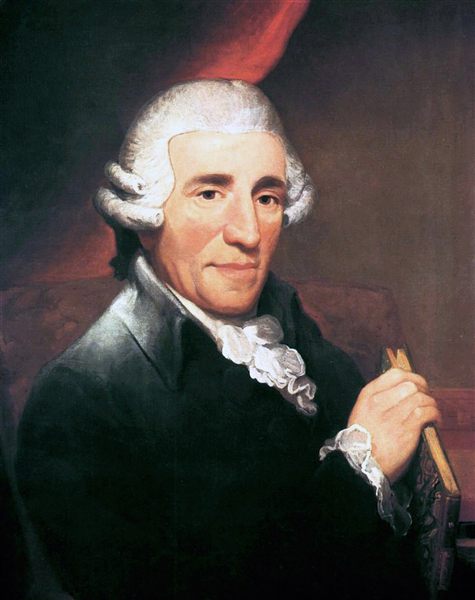
Joseph Haydn spent nearly thirty years as a court composer for the wealthy Esterhazy family, largely isolated from other major composers
- a position he later said forced him to "become original." In that relative isolation, he did more than almost anyone to establish the symphony and the string quartet in the forms later composers would inherit, writing over 100 symphonies and dozens of quartets that set the template for the entire Classical era.
His Symphony No. 94, nicknamed "Surprise," is a good example of his sense of humor: a hushed, gentle passage is suddenly interrupted by a single loud orchestral chord. Popular legend says it was written to jolt a dozing audience awake, though Haydn himself denied that was the intent when asked. That combination of formal mastery and genuine wit runs through much of his output, distinguishing him from the more overtly dramatic composers who followed him.
Late in his career, after visiting London and hearing Handel's oratorios performed at large scale, Haydn wrote The Creation, a large oratorio depicting the biblical creation story - a work that pushed his own music toward the grander, more dramatic scale the Romantic era would soon take even further. He was also a direct mentor to the young Beethoven, tying him directly into the next generation's break from Classical convention.
Where to start listening: the "Surprise" movement of Symphony No. 94 is a two-minute demonstration of his wit; The Creation's opening depiction of chaos resolving into light shows his more dramatic ambitions.