Composer
Sergei Prokofiev
A modernist edge softened by a genuine gift for melody and storytelling.
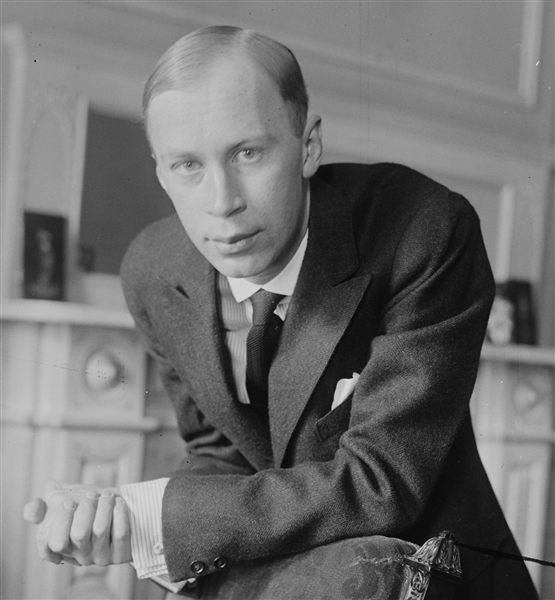
Sergei Prokofiev combined the harmonic bite and rhythmic drive of Modernist composers like Stravinsky with a melodic clarity that kept his music accessible even at its most dissonant - a balance that let him write both serious concert works and some of the most beloved music ever aimed specifically at children.
Life in brief
Prokofiev was born in 1891 on a country estate in what is now eastern Ukraine, where his father managed the land; his mother, a capable pianist, gave him his first lessons. He wrote his first opera at nine. At the St Petersburg Conservatory he became known as a brilliant, brash young rebel whose spiky, percussive piano music delighted some teachers and outraged others.
After the 1917 Revolution he left Russia, traveling across Siberia and Japan to the United States, where his opera The Love for Three Oranges premiered in Chicago in 1921. He spent most of the next fifteen years in the West, based largely in Paris, writing for Diaghilev's Ballets Russes and touring as a pianist.
In 1936 he moved back to the Soviet Union for good. Within a few years he had written Peter and the Wolf, the ballet Romeo and Juliet, and the score for Sergei Eisenstein's film Alexander Nevsky. But in 1948, he, like Shostakovich, was officially condemned by the Communist Party for "formalism," and his performances dwindled; the same year, his estranged first wife, Lina, was arrested and sent to a labor camp. His health declined, and he died on March 5, 1953 - the same day as Stalin, so that his death went almost unnoticed in the Soviet press.
Music and style
Prokofiev's music is instantly recognizable: wide-leaping melodies that swerve into unexpected keys, crisp, motoric rhythms, biting wit, and a streak of grotesque humor - balanced by moments of real lyrical warmth. He was a superb orchestrator and a natural storyteller, at home in ballet, opera, and film.
Key works
- Romeo and Juliet - his ballet is a staple of the dance repertoire, its "Dance of the Knights" among the most recognizable pieces of 20th-century orchestral music.
- Peter and the Wolf (1936) - a narrated children's piece that assigns each character a specific instrument - the bird a flute, the duck an oboe, the cat a clarinet, the wolf three horns - making it one of the most direct, effective introductions to the orchestra ever written.
- "Classical" Symphony (No. 1, 1917) - a witty imagining of what Haydn might have written had he lived in the 20th century.
- Piano Concerto No. 3 (1921) - his most popular concerto.
- Alexander Nevsky (1938) - a film score later reworked as a cantata.
- Lieutenant Kijé - a film score whose sleigh-ride "Troika" is a holiday favorite.
- Symphony No. 5 (1944) and the "War" piano sonatas (Nos. 6 – 8).
- Cinderella - a second great full-length ballet.
Legacy
Prokofiev is among the most performed composers of the 20th century. Peter and the Wolf has introduced generations of children to the orchestra, his ballets are repertoire mainstays, and his film collaboration with Eisenstein set a model for how a symphonic score and images can work together.
Where to start listening: Peter and the Wolf is a genuinely excellent entry point at any age; "Dance of the Knights" from Romeo and Juliet shows his more dramatic orchestral writing. The "Classical" Symphony is fifteen minutes of pure fun.