Instrument
Piano
Struck strings and a full harmonic range, in a single instrument played by one person.
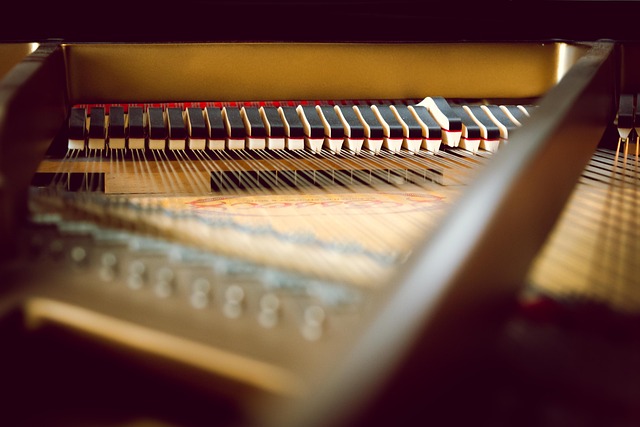
The piano produces sound by striking steel strings with felt-covered hammers when a key is pressed - visible in the image above, where each key's hammer sits ready against its own set of strings. That mechanism, invented in Italy around 1700, let players control both loud and soft dynamics through touch alone (the name "pianoforte" literally means "soft-loud"), something its harpsichord predecessor couldn't do.
Because a single player commands the instrument's entire range - bass notes, melody, and harmony all at once - the piano can function as a complete musical world on its own: solo repertoire, accompaniment for singers and other instruments, and the core instrument of the piano concerto and piano sonata alike. Its versatility has made it the instrument most commonly used for composing and teaching music generally, not just for performing it.
Nearly every major composer since the instrument's rise in the 18th century has written extensively for it: Mozart and Beethoven's sonatas, Chopin's nocturnes and etudes, and Rachmaninoff's concertos each show a different facet of what the instrument can do.
Where to start listening: Beethoven's Moonlight Sonata and Chopin's Nocturne in E-flat major both show the instrument's expressive range at its most immediately accessible.