Composer
György Ligeti
The survivor whose shimmering clouds of sound reached millions through 2001.
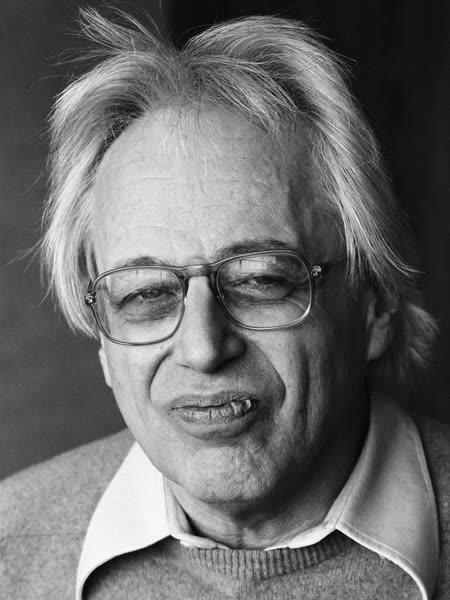
György Ligeti was one of the most inventive composers of the 20th century, famous for vast, shimmering clouds of sound in which individual notes melt into slowly shifting textures. Millions of people have heard his music without knowing it, in Stanley Kubrick's film 2001: A Space Odyssey.
Life in brief
Ligeti was born in 1923 into a Hungarian Jewish family in Transylvania, a region that had recently passed from Hungary to Romania. He began studying music in Cluj, but his life was shattered by the Second World War. Drafted into a forced-labor unit, he survived, but his father and younger brother died in Nazi concentration camps; his mother survived Auschwitz.
After the war he studied and then taught at the Liszt Academy in Budapest. In Communist Hungary, modern Western music was banned, and much of his work could not be performed. After the Hungarian Revolution was crushed in 1956, he escaped to Vienna, crossing the border on foot. In the West he discovered the avant-garde, working in the electronic music studio in Cologne, and he soon found his own voice. He later became an Austrian citizen, taught for many years in Hamburg, and died in Vienna in 2006.
Music and style
Ligeti's breakthrough was a technique he called micropolyphony: dozens of instruments or voices each play their own intricate line, but so close together that the ear hears not melodies but a single glowing, shifting texture - a cloud of sound. His music is often slow-moving and mysterious, but he also loved wit, absurdity, and mechanical rhythms, and he wrote a piece for one hundred metronomes. In later life he drew inspiration from African polyrhythms, fractal geometry, and the player-piano studies of Conlon Nancarrow, creating music of dizzying rhythmic complexity.
Key works
- Atmosphères (1961) - an orchestral work made entirely of slowly changing clouds of sound, with no melody or beat.
- Requiem (1963–1965) - an overwhelming setting for two soloists, choirs, and orchestra. See requiem.
- Lux aeterna (1966) - an ethereal piece for sixteen unaccompanied voices. See choral music.
- Le Grand Macabre (1974–1977) - a wild, absurdist opera about the end of the world.
- Études for piano (1985–2001) - three books of fiendishly difficult and dazzling studies, among the most important piano music of their time. See étude.
- Musica ricercata (1951–1953) - eleven piano pieces from his Budapest years; the first uses only two notes.
In the movies
In 1968 Kubrick used Atmosphères, Lux aeterna, and part of the Requiem in 2001: A Space Odyssey - at first without asking the composer's permission, which led to a dispute. Kubrick later used Ligeti's music again in The Shining and Eyes Wide Shut, and these films brought his sound to a huge audience. See film score.
Legacy
Ligeti's textures transformed how composers think about sound, influencing concert music, film music, and electronic music alike. He is now regarded as one of the giants of modern music. See also Bartók, whose music shaped his early style, and the 20th century.
Where to start listening: Lux aeterna, then Atmosphères - best heard in the dark. For something playful, try the piano Études, or the opening of Musica ricercata.