Composer
William Walton
The Oldham choirboy who became the voice of British ceremony - and wrote some of its most vivid modern music.
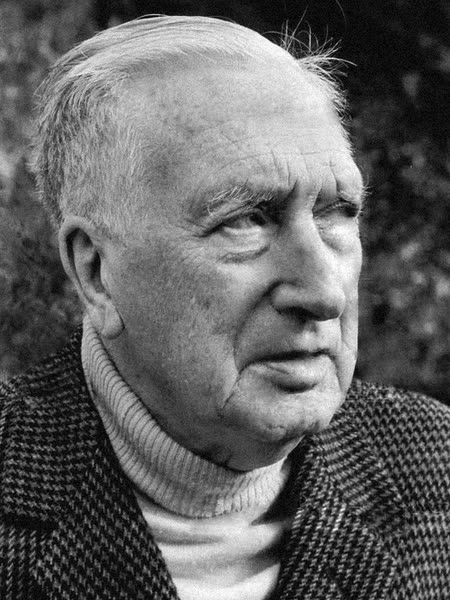
William Walton was one of the leading British composers of the 20th century. He burst onto the scene as a young modernist with the witty, jazzy Façade, and went on to write powerful concertos and choral works, rousing coronation marches, and memorable film scores for Laurence Olivier's Shakespeare films.
Life in brief
Walton was born in 1902 in Oldham, an industrial town in Lancashire, the son of a singing teacher and choirmaster. At ten he won a place as a chorister at Christ Church Cathedral, Oxford, and he began composing there. As an undergraduate he was taken up by the eccentric, aristocratic Sitwell siblings - the poet Edith and her brothers Osbert and Sacheverell - who gave him a home in London for over a decade and introduced him to the avant-garde.
Façade (1922), in which Edith Sitwell's poems were recited through a megaphone from behind a painted curtain over Walton's music, caused a scandal and made him famous. It was followed by the Viola Concerto (1929), the dramatic choral work Belshazzar's Feast (1931), and the First Symphony (1935), which established him as the leading young British composer of his day.
He wrote the march Crown Imperial for the coronation of George VI in 1937 and Orb and Sceptre for Elizabeth II in 1953, and during the Second World War he composed film music, including the score for Olivier's Henry V. In 1948 he married an Argentinian, Susana Gil Passo, and they settled on the Italian island of Ischia, where they created a famous garden. He was knighted in 1951 and died on Ischia in 1983.
Music and style
Walton's music combines jagged, syncopated rhythms and spiky harmony, influenced by jazz and by Stravinsky, with soaring, bittersweet melody and a gift for pageantry. His orchestration is brilliant, and his ceremonial music, in the tradition of Elgar, has a swaggering grandeur.
Key works
- Façade (1922) - witty settings of Edith Sitwell's poems for reciter and instruments, full of dance rhythms and parodies.
- Belshazzar's Feast (1931) - a thrilling oratorio for baritone, chorus, and orchestra, with two extra brass bands. See oratorio.
- Crown Imperial (1937) - a coronation march for George VI. See march.
- Viola Concerto (1929) - one of the great works for the instrument, first played by Paul Hindemith. See viola.
- Symphony No. 1 (1935) - driving, intense, and powerful. See symphony.
- Henry V (1944) - his score for Olivier's patriotic wartime film. See film score.
Legacy
Walton's coronation marches are still heard on royal occasions, and Belshazzar's Feast remains a favorite of choral societies. See also Britten, his younger contemporary, and the 20th century.
Where to start listening: Crown Imperial, then Belshazzar's Feast and the Viola Concerto.