Composer
Manuel de Falla
The greatest Spanish composer of the 20th century, from flamenco fire to austere modernism.
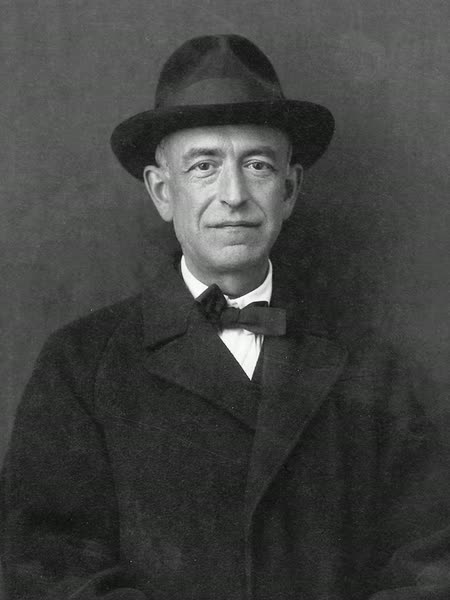
Manuel de Falla was the most important Spanish composer of the 20th century. He captured the passion of Andalusian flamenco and folk music in works such as El amor brujo, with its famous Ritual Fire Dance, and The Three-Cornered Hat, and later developed a sparer, neoclassical style all his own.
Life in brief
Falla was born in 1876 in Cádiz, in southern Spain. He studied piano and composition in Madrid, where the composer and scholar Felipe Pedrell inspired him to look to Spain's own musical heritage. In 1905 his opera La vida breve won a national competition, but it remained unperformed, and in 1907 he moved to Paris. There he was welcomed by Debussy, Ravel, and Paul Dukas, and La vida breve was finally staged in 1913.
The First World War sent him back to Madrid in 1914, and the following years brought his most popular works: the ballet El amor brujo (1915), Nights in the Gardens of Spain (1916), and The Three-Cornered Hat (1919), commissioned by Sergei Diaghilev for the Ballets Russes, with designs by Pablo Picasso.
In 1920 he settled in Granada, where he became a friend of the poet Federico García Lorca, and together they organized a festival of cante jondo in 1922 to preserve Andalusian deep song. The Spanish Civil War, in which Lorca was murdered in 1936, devastated him. In 1939 he left for Argentina, where he spent his last years working on a vast choral work, Atlántida, which he left unfinished at his death in 1946.
Music and style
Falla's early music is steeped in Andalusian flamenco, with its strumming guitars, stamping rhythms, and the wailing ornaments of deep song, combined with orchestral colors learned in Paris. In the 1920s his style became leaner and more austere, drawing on old Spanish music, as in his puppet opera Master Peter's Puppet Show and his concerto for harpsichord.
Key works
- "Ritual Fire Dance" - an electrifying dance to drive away evil spirits, from El amor brujo ("Love, the Magician"), also famous as a piano solo.
- The Three-Cornered Hat (1919) - a comic ballet of village life, full of Spanish dances. See ballet music.
- Nights in the Gardens of Spain (1916) - three shimmering nocturnes for piano and orchestra.
- La vida breve ("Life Is Short," 1913) - a tragic opera set among the gypsies of Granada.
- Harpsichord Concerto (1926) - one of the first modern concertos for the instrument, written for Wanda Landowska. See harpsichord.
Legacy
Falla put Spanish music on the international stage alongside Albéniz and Enrique Granados, and his blend of folk tradition and modern technique influenced composers across the Spanish-speaking world. See also the 20th century.
Where to start listening: the "Ritual Fire Dance," then the dances from The Three-Cornered Hat and Nights in the Gardens of Spain.