Instrument
Flute
A reedless woodwind, played by splitting a stream of air across an edge.
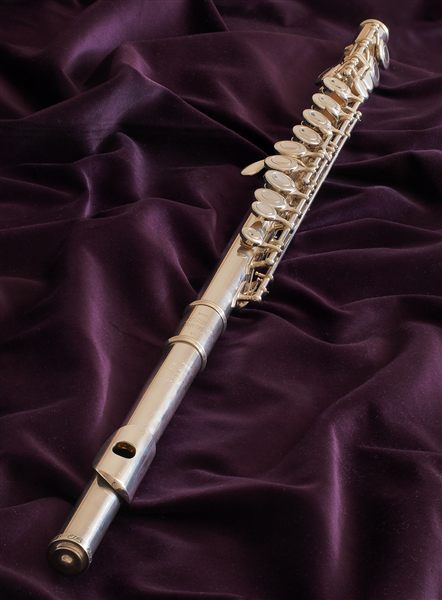
The flute is the woodwind family's odd one out: unlike every other instrument in the section, it uses no reed at all. Sound is produced the same way it is when blowing across the top of a bottle - a stream of air splits across a sharp edge, setting the air column inside the tube vibrating. Despite its name and wooden ancestry, the modern orchestral flute is almost always made of metal today, not wood.
That reedless mechanism gives the flute an especially bright, clear, agile tone, and it sits at the top of the woodwind section's range, often carrying quick, light melodic passagework that would be more difficult for the reed instruments around it. Its close cousin, the piccolo, is built the same way but sounds an octave higher, and is reserved for moments needing extra brilliance or piercing volume.
The modern flute's key layout owes almost everything to Theobald Boehm, a 19th-century flutist and instrument maker who redesigned its fingering system and tone-hole placement for better tuning and tone; his "Boehm system" proved so effective that clarinets and other woodwinds later adopted versions of it too. Mozart, despite writing two well-loved flute concertos and a concerto for flute and harp, reportedly disliked composing for the instrument, which makes those works something of a reluctant contribution to the repertoire.
Where to start listening: the opening flute solo of Debussy's Prelude to the Afternoon of a Faun is one of the most famous flute melodies in the entire orchestral repertoire. Mozart's Flute Concerto No. 2 in D major is a lighter, more Classical-era alternative.