Composer
Henry Purcell
England's greatest Baroque composer, whose "Dido's Lament" is one of music's great farewells.
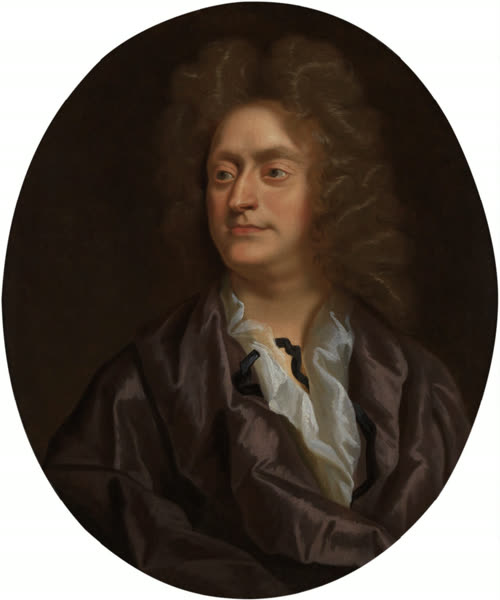
Henry Purcell is widely regarded as the greatest English composer of the Baroque era, and one of the greatest English composers of any time. In a short life of about 36 years he wrote superb music for the church, the court, and the theater, including Dido and Aeneas, the first great English opera.
Life in brief
Purcell was born in London in 1659, the year before King Charles II returned to the throne and music and theater, suppressed under the Puritans, began to flourish again. He sang as a boy in the Chapel Royal and was soon composing. At about twenty he became organist of Westminster Abbey, and later also of the Chapel Royal, and he wrote music for royal ceremonies, birthdays, and coronations.
In his last years he became the leading composer for the London stage, writing music for dozens of plays and several large "semi-operas" - spectacular entertainments mixing spoken drama with music and dance. In 1695 he wrote music for the funeral of Queen Mary II; a few months later he died himself, and the same music was performed at his own funeral in Westminster Abbey, where he is buried near the organ.
Music and style
Purcell combined the influences of Italian and French music with a strong English character, and he had an extraordinary gift for setting English words: his vocal lines follow the rhythms and meaning of the language with uncanny naturalness. He loved the ground bass, a repeating bass line over which a melody unfolds freely - see theme and variations - and his harmonies, full of bold, expressive dissonances, can be startlingly modern.
Key works
- Dido and Aeneas (by 1689) - a compact tragedy based on Virgil, ending with "Dido's Lament" ("When I am laid in earth"), one of the most moving arias ever written, sung over a slowly descending ground bass.
- Music for the Funeral of Queen Mary (1695) - solemn music for voices, trumpets, and drums, later famous from the soundtrack of the film A Clockwork Orange.
- King Arthur (1691) - a semi-opera including the shivering "Cold Song."
- The Fairy-Queen (1692) - a semi-opera loosely based on A Midsummer Night's Dream.
- Abdelazer (1695) - incidental music whose Rondeau became the theme of Britten's The Young Person's Guide to the Orchestra. See rondo.
- "Hail, bright Cecilia" (1692) - an ode for the patron saint of music.
Legacy
After his death, Purcell's music was gathered into a collection called Orpheus Britannicus - "the British Orpheus" - and English musicians long regarded him as the country's greatest composer. In the 20th century, composers such as Britten championed him, and "Dido's Lament" is now heard around the world - it is played every year at the Remembrance Sunday ceremony at the Cenotaph in London.
Where to start listening: "Dido's Lament" from Dido and Aeneas is the essential first listen. Then hear the Rondeau from Abdelazer - you may recognize it from Britten's Young Person's Guide.