Composer
François Couperin
"Couperin the Great," the poet of the French harpsichord.
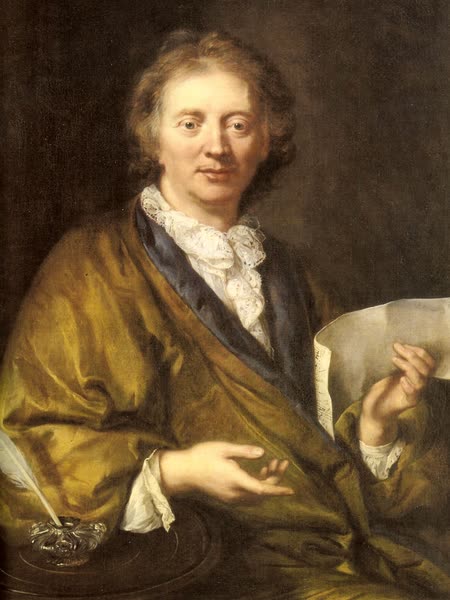
François Couperin, known as Couperin le Grand ("Couperin the Great"), was the most brilliant member of a whole dynasty of French musicians, and the supreme composer for the French harpsichord. His miniatures, with their poetic and puzzling titles, are among the most refined and personal keyboard music of the Baroque era.
Life in brief
Couperin was born in Paris in 1668 into a family that had produced organists for generations; his uncle Louis Couperin had been one of the leading keyboard composers of the previous generation. His father, organist of the church of Saint-Gervais in Paris, died when François was ten, and the post was held for him until he was old enough to take over - a post the family kept for more than 170 years.
In 1693 Louis XIV appointed him one of the organists of the Chapelle Royale at Versailles, and he became harpsichord teacher to members of the royal family and the high nobility. He took part in the king's chamber concerts, published his music in handsome editions, and was made a knight of the papal Order of the Lateran. In later life his health declined, and he died in Paris in 1733.
Music and style
Couperin's harpsichord music is gathered into four books (1713–1730), containing twenty-seven ordres - his word for suites. Most pieces have evocative titles: portraits of people, moods, scenes, and riddles, such as "The Mysterious Barricades," "The Tic-Toc-Choc," or "The Nightingale in Love." His style is elegant, intimate, and richly ornamented, full of delicate trills and graces that he carefully specified, and of subtle, melancholy harmonies.
He was also fascinated by the rival styles of France and Italy. He admired Corelli and wrote trio sonatas in the Italian manner, and in his collection Les Goûts-réunis ("The Reunited Tastes") and his musical tributes to both Corelli and Lully, he set out to unite the two. His treatise The Art of Playing the Harpsichord (1716) is a key source for how Baroque keyboard music was performed.
Key works
- "Les Barricades mystérieuses" - a gently rippling piece whose enigmatic title has never been explained, now his best-known work.
- Pièces de clavecin (1713–1730) - four books of harpsichord pieces. See harpsichord.
- Leçons de ténèbres (c. 1714) - exquisite settings of the Lamentations of Jeremiah for one or two voices, for Holy Week.
- L'Art de toucher le clavecin (1716) - his influential method for playing the harpsichord.
- Les Nations (1726) - four large suites for instrumental ensemble, combining French and Italian styles. See suite.
- "Le Tic-Toc-Choc" - a dazzling, clockwork-like piece with the hands overlapping on two keyboards.
Legacy
Bach knew and admired Couperin's music, Brahms helped edit his harpsichord works, and Ravel paid tribute in Le Tombeau de Couperin. Today his music is played on both harpsichord and piano. See also Rameau, his great successor.
Where to start listening: "Les Barricades mystérieuses," then "Le Tic-Toc-Choc" and the first of the Leçons de ténèbres.