Composer
Arcangelo Corelli
The violinist whose six slim collections shaped Baroque music across Europe.
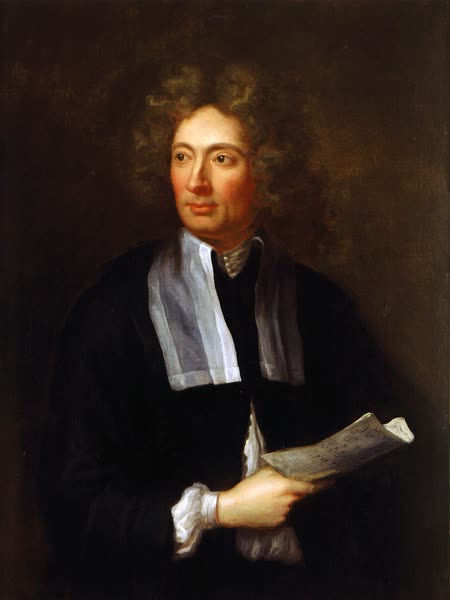
Arcangelo Corelli published only six collections of music in his lifetime, yet few composers have had so wide an influence. His violin sonatas and concerti grossi became models of elegance and balance studied all over Europe, and they helped make the violin the leading instrument of the Baroque era.
Life in brief
Corelli was born in 1653 in Fusignano, a small town near Ravenna in northern Italy, into a prosperous landowning family. He trained as a violinist in Bologna, a great center of string playing, and by the mid-1670s he had moved to Rome, which would be his home for the rest of his life.
In Rome he rose to fame as the city's leading violinist, director, and composer. He served a series of powerful patrons: Queen Christina of Sweden, who had settled in Rome after giving up her throne; Cardinal Benedetto Pamphili; and, from 1690, the art-loving Cardinal Pietro Ottoboni, in whose palace he lived. He directed lavish performances with large string orchestras, and when the young Handel visited Rome, Corelli led the orchestra for his oratorio La resurrezione in 1708.
Corelli was famous for his gentle character and refined taste, and also for his care as a composer: he polished his music for years before allowing it to be printed. He died in Rome in 1713, a wealthy man and an art collector, and was buried in the Pantheon.
Music and style
Corelli's music is clear, singing, and beautifully proportioned. He wrote almost exclusively for strings, and he helped establish the trio sonata (two violins and a bass line) and the concerto grosso, in which a small group of soloists alternates with a full string orchestra. His smooth, purposeful harmony, with chains of suspensions and clear progressions through related keys, became a foundation of the Baroque style. As a violinist he was admired for expressive tone rather than showy tricks, and his sonatas were long used to train players.
Key works
- Trio sonatas, Opp. 1–4 (1681–1694) - forty-eight sonatas, some for church and some for chamber use, which set the standard for the form.
- 12 Violin Sonatas, Op. 5 (1700) - one of the most influential publications in the history of the violin, reprinted dozens of times.
- Sonata Op. 5 No. 12, "La Folia" - a set of variations on a famous dance tune. See theme and variations.
- 12 Concerti Grossi, Op. 6 (published 1714) - his masterpieces, compiled over many years and printed just after his death.
- Concerto Grosso Op. 6 No. 8, "Christmas Concerto" - marked "made for the night of Christmas," it ends with a gentle pastorale.
Legacy
Corelli's pupils and admirers spread his style across Europe, and Vivaldi, Handel, and Bach all learned from his example. Handel's own Op. 6 concerti grossi pay direct tribute to him. His violin teaching lived on through pupils such as Francesco Geminiani, making him a founder of the modern school of violin playing. See also the concerto and the violin.
Where to start listening: the "Christmas Concerto" is warm, festive, and easy to love. Then try the "La Folia" sonata, and follow it with any of the Op. 6 concerti grossi.