Instrument
Harp
A plucked string instrument tuned by foot pedals, not fingering.
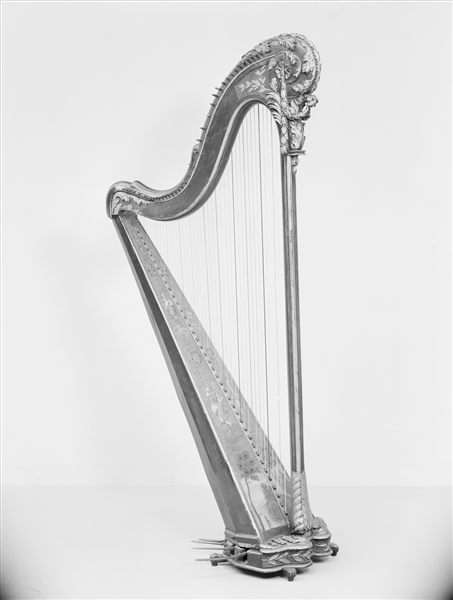
The harp belongs to the string family in the broad sense - it makes sound from vibrating strings - but works quite differently from the bowed instruments around it. Its strings run vertically and are plucked directly with the fingers, and pitch is changed not by pressing strings against a fingerboard but by pressing one of seven foot pedals, each of which can raise a whole set of same-lettered strings by a half or whole step.
That pedal mechanism makes the harp less harmonically flexible in fast passages than a keyboard instrument, which is part of why composers tend to use it sparingly and specifically - for shimmering arpeggios, delicate accompaniment, or a distinctive splash of color - rather than as a constant presence the way strings or woodwinds are used.
The modern orchestral (or "pedal") harp, with its full chromatic pedal system, was developed in the early 1800s; earlier harps, including many folk harp traditions still played today, use simpler tuning systems without that pedal mechanism.
Where to start listening: the harp glissando (a rapid sweep across the strings) that opens Tchaikovsky's Waltz of the Flowers is one of the instrument's most recognizable orchestral moments.