Instrument
Piccolo
A half-size flute, and the highest voice in the orchestra.
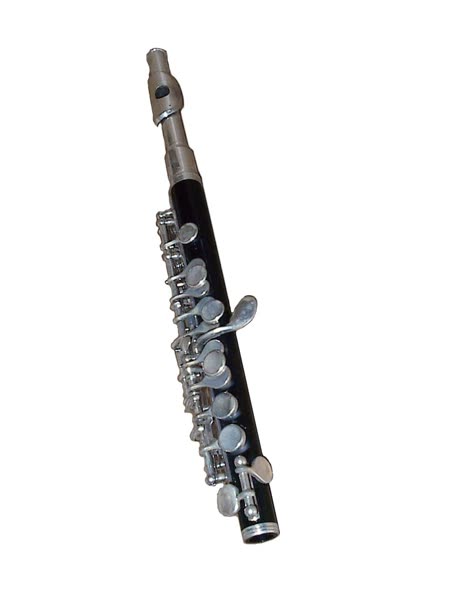
The piccolo is a small flute, about half the length of the standard instrument, and it sounds an octave higher. That makes it the highest-pitched instrument in the orchestra - bright, glittering, and able to cut through even the loudest full-orchestra climax. Its name is short for the Italian flauto piccolo, "little flute."
How it's played
The piccolo is played exactly like a flute: held sideways and sounded by blowing across an opening, with no reed. It has almost the same keys and fingerings, so flutists can switch between the two, and in most orchestras the piccolo part is played by one of the flute section, who swaps instruments as needed. Piccolos are made of metal, wood, or plastic; many players prefer wood for its warmer, sweeter tone.
To save players from reading endless lines above the staff, piccolo music is written an octave lower than it sounds. Playing it well is notoriously hard: the tiny instrument demands precise control of breath and lips, and any slip in tuning is easy to hear.
A short history
Small, high flutes and fifes have been used in military bands for centuries, their piercing sound carrying across a parade ground or battlefield. The modern piccolo joined the orchestra around 1800, and one of its first great symphonic appearances came in the triumphant finale of Beethoven's Fifth Symphony, alongside the contrabassoon and trombones. Romantic composers quickly added it to their expanding orchestras for brilliance, sparkle, and special effects - storms, whistling winds, and shrieking climaxes.
In bands and beyond
The piccolo is just as important outside the orchestra. Military and marching bands rely on its piercing sound to carry outdoors, and it is a regular member of the concert band and wind ensemble, where it often doubles the melody high above the rest of the woodwinds. Its ancestor, the small, keyless fife, is still played in fife-and-drum corps.
Famous piccolo moments
- Beethoven - Symphony No. 5, finale.
- Tchaikovsky - Symphony No. 4, the scherzo, where the piccolo darts above the woodwinds.
- Ravel - Boléro, where two piccolos join a horn and the celesta in an eerie, organ-like blend.
- John Philip Sousa - "The Stars and Stripes Forever," with its famous piccolo solo in the final strain.
- Vivaldi - concertos for "flautino," often played on the piccolo today.
Where to start listening: the piccolo solo in "The Stars and Stripes Forever" is the instrument at its most exuberant. Then listen for its glitter above the full orchestra in the finale of Beethoven's Fifth. See also the woodwind family.