Instrument
English Horn
The oboe's lower, mellower sibling - neither English nor a horn.
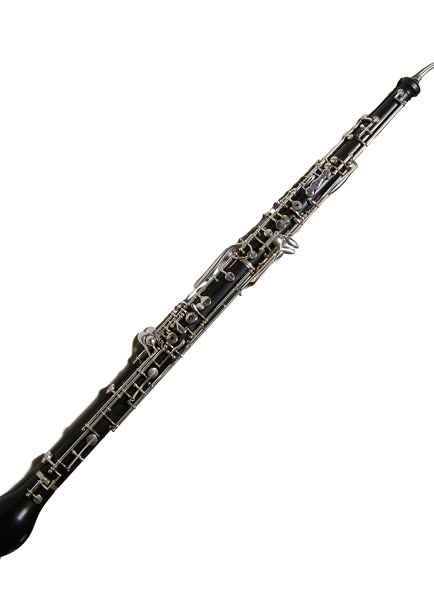
The English horn - also known by its French name, cor anglais - is a larger, lower relative of the oboe, pitched a fifth below it. It has a warmer, darker, more plaintive sound, and composers turn to it again and again for melodies of longing, loneliness, and nostalgia.
How it's built and played
Like the oboe, the English horn is a double-reed woodwind, but it is longer, and its reed sits on a short, bent metal tube that angles the instrument comfortably toward the player. Its most distinctive feature is its bell, which swells into a rounded bulb rather than opening out like a trumpet; the bulb softens and darkens the tone. It is usually played by an oboist who specializes in it, and like the clarinet and horn, it is a transposing instrument, its music written a fifth higher than it sounds.
A misleading name
Despite its name, the English horn is neither English nor a horn. It developed in the early 18th century from earlier curved, alto oboes, and nobody is quite sure how it got its name. One popular theory suggests a confusion between the German words for "angelic" and "English," since early instruments of this kind were sometimes compared to the horns played by angels in religious paintings.
The voice of melancholy
Romantic composers loved the English horn's haunting tone. Berlioz used it in his Symphonie fantastique for a shepherd's lonely pipe, answered by a distant oboe. Rossini gave it a pastoral solo in the William Tell Overture, and Wagner gave it a long, desolate shepherd's tune at the start of the last act of Tristan und Isolde.
Famous English horn solos
- Dvořák - Symphony No. 9, "From the New World," the Largo - probably the most famous English horn melody of all.
- Sibelius - The Swan of Tuonela, in which the English horn is the swan gliding on the river of the dead.
- Berlioz - Symphonie fantastique, "Scene in the Country."
- Rossini - William Tell Overture, the pastoral section.
- Joaquín Rodrigo - Concierto de Aranjuez, whose famous Adagio melody is introduced by the English horn.
- Copland - Quiet City, a nocturne for trumpet, English horn, and strings.
Where to start listening: the Largo from Dvořák's "New World" Symphony is the essential first listen. Then try The Swan of Tuonela for the English horn at its most mysterious. See also the woodwind family.