Instrument
Tuba
The largest and lowest-pitched brass instrument, and the newest member of the standard orchestra.
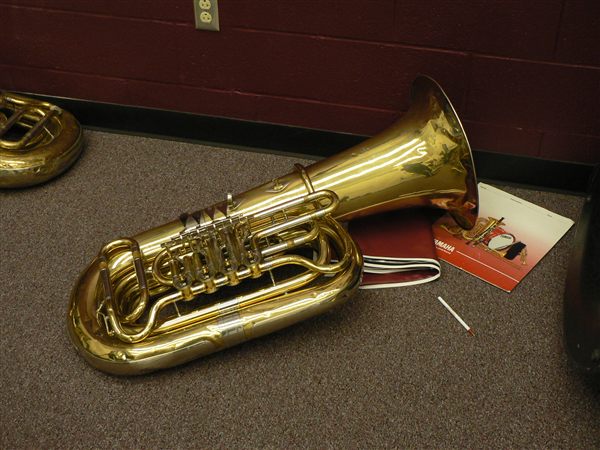
The tuba is the largest and lowest-pitched instrument in the brass family, providing the bass foundation beneath the trombones, horns, and trumpets above it. It's also the youngest standard orchestral instrument by a wide margin - not invented until the 1830s, meaning composers before the mid-1800s (including Beethoven and everyone earlier) never wrote a note for it, since it simply didn't exist yet.
Despite its size and deep register, the tuba is a genuinely agile instrument in skilled hands, and while it's typically used to anchor the brass section's harmonic foundation, it does have a modest solo and concerto repertoire showing off a more melodic, lyrical side than its reputation as a purely supportive bass instrument might suggest. Like the trumpet, it changes pitch using valves rather than a slide, but its tubing is conical (gradually widening along its length) rather than the trumpet's mostly cylindrical bore, which is a large part of why the two instruments sound so different despite sharing a valve mechanism.
Orchestras typically use just one tuba, in contrast to the two or three players common in the other brass sections, and different sizes (pitched in BBb, CC, Eb, or F) suit different orchestral and solo contexts. It's also easy to confuse with the similarly-named Wagner tuba, which Richard Wagner commissioned for his Ring cycle: despite the shared name, it's a distinct hybrid instrument played with a horn mouthpiece, not a smaller version of the standard tuba.
Where to start listening: the tuba's warm, exposed solo melody in the "Bydlo" movement of Mussorgsky's Pictures at an Exhibition (in Ravel's orchestration) shows its lyrical, melodic capabilities. Vaughan Williams' Tuba Concerto, one of the few concertos written for the instrument, is worth hearing for how far it pushes the tuba as a solo voice.