Instrument Family
The Brass Family
Trumpet, French horn, trombone, and tuba - buzzing lips, metal tubing, and the orchestra's loudest section.
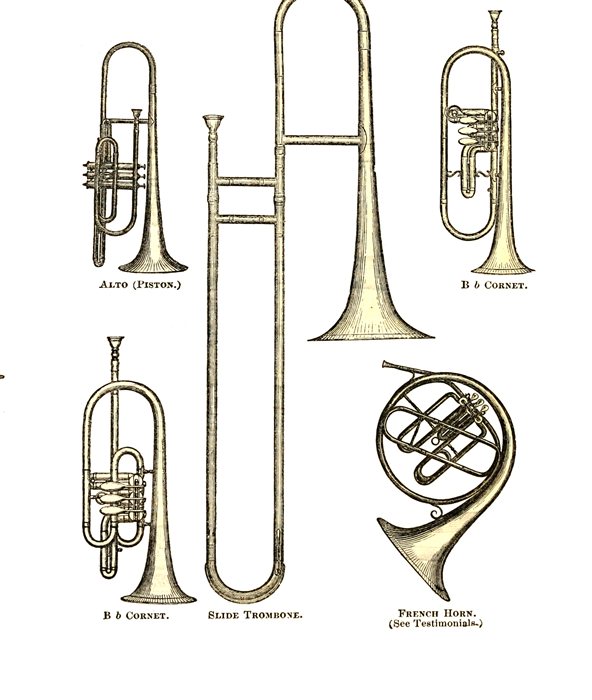
Every brass instrument works on the same basic principle: the player buzzes their lips against a metal mouthpiece, and that buzz resonates through a length of coiled metal tubing that shapes it into a musical pitch. Pitch changes either by adjusting lip tension (to jump between notes in the natural overtone series), by pressing valves that reroute the air through extra tubing (trumpet, French horn, tuba), or by physically extending a sliding tube (trombone).
The trumpet is the highest and most piercing voice in the section, historically associated with fanfares and military signals. The French horn has the mellowest, most blended tone and is often used to bridge brass and woodwind textures. The trombone's slide gives it a uniquely smooth glide between pitches unavailable to valved instruments. The tuba, the largest and lowest, anchors the section from below.
Because brass instruments can produce far more raw volume than strings or woodwinds, composers have historically used the section carefully, saving it for moments of real climax, ceremony, or power rather than constant use.
Where to start listening: the brass fanfare that opens Copland's Fanfare for the Common Man shows the section at its most direct and ceremonial.