Instrument
Trumpet
The highest, brightest voice in the brass section, historically tied to fanfare and signal.
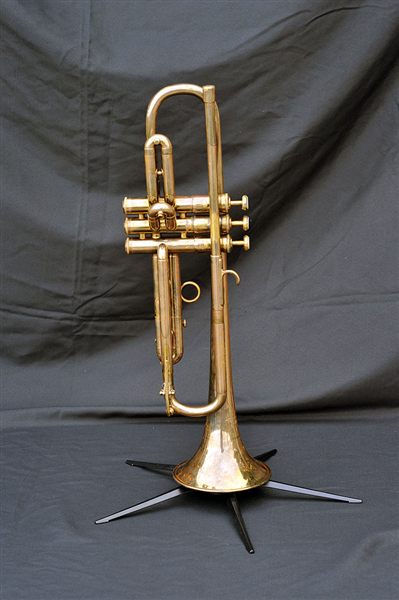
The trumpet is the highest-pitched and often the most piercing instrument in the brass family, and its history as a signaling instrument runs deep - long before it had a place in the orchestra, trumpets (and their ancestors) were used for military calls and ceremonial announcements, and that association with fanfare, triumph, and public occasion has stuck with the instrument ever since.
Modern trumpets use three valves, which reroute the air through extra lengths of tubing to change pitch, supplementing the natural overtone series a player can access purely through lip tension alone. Before valves were standardized in the 1800s, trumpet parts were largely restricted to that natural overtone series, which is part of why Baroque and early Classical trumpet writing sounds different from Romantic-era writing composed after valves became standard.
Baroque composers got around that limitation with clarino playing: skilled trumpeters working in an extremely high register, where the overtone series is dense enough to produce something close to a full melodic scale without any valves at all. Bach's Brandenburg Concerto No. 2, which pairs a clarino trumpet with recorder, oboe, and violin as equal solo voices, is one of the most demanding surviving examples of the technique. The closely related cornet, valved from its 19th-century origins and built with a more conical bore, produces a mellower tone than the trumpet and is a mainstay of brass bands rather than the symphony orchestra.
Where to start listening: the trumpet fanfare that opens Copland's Fanfare for the Common Man is one of the instrument's most direct, ceremonial showcases. The clarino writing in Bach's Brandenburg Concerto No. 2 shows the Baroque high-trumpet tradition at its most virtuosic.