Composer
Frederick Delius
The dreamy painter of landscapes in sound, from Florida orange groves to English springs.
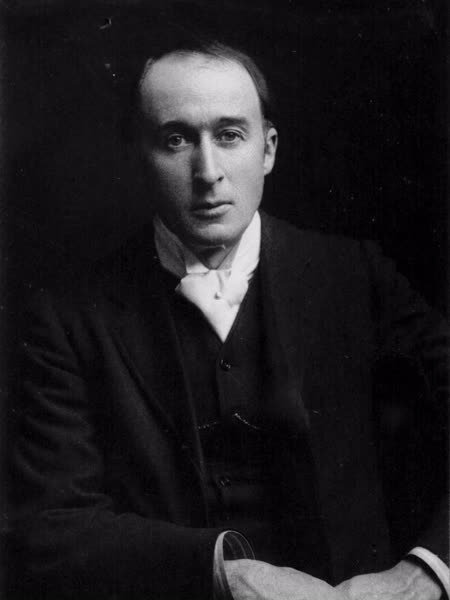
Frederick Delius wrote some of the most richly atmospheric music of the early 20th century: hazy, glowing, nostalgic tone pictures of nature, summer, and lost love. Born in England to German parents, he spent most of his life in France, and his music belongs to no single country.
Life in brief
Delius was born in 1862 in Bradford, in the north of England, the son of a prosperous German-born wool merchant who expected him to join the family business. Instead, in 1884, he persuaded his father to let him manage an orange plantation in Florida. There he neglected the oranges, took lessons from a local organist, and was deeply moved by the singing of African American workers drifting across the river at night.
He then studied at the Leipzig Conservatory, where he met Grieg, who persuaded Delius's father to let him pursue music. From 1888 he lived in France, and from 1897 at Grez-sur-Loing, near Fontainebleau, with the painter Jelka Rosen, whom he later married.
Recognition came slowly, at first more in Germany than in England, and above all through the conductor Thomas Beecham, who championed his music for decades. In the 1920s Delius became blind and paralyzed as a result of syphilis. A young English musician, Eric Fenby, came to live with him and took down his last works note by note, by dictation. Delius died at Grez in 1934, and was buried in the English village of Limpsfield.
Music and style
Delius's music flows like a river, with lush, chromatic harmonies that shift gently from chord to chord, long, improvisatory melodies, and little sense of conventional development. He was influenced by Wagner, Grieg, and the African American music he heard in Florida, but his voice is utterly personal. His favorite subjects were nature and the passing of time, evoked with bittersweet longing.
Key works
- On Hearing the First Cuckoo in Spring (1912) - a short, gentle orchestral idyll built on a Norwegian folk song, with the cuckoo's call in the clarinet.
- Brigg Fair (1907) - an "English rhapsody" of variations on a folk song. See rhapsody.
- "The Walk to the Paradise Garden" - the yearning orchestral interlude from his opera A Village Romeo and Juliet.
- Sea Drift (1904) - a setting of Walt Whitman for baritone, chorus, and orchestra about a bird mourning its lost mate.
- A Mass of Life (1905) - a huge choral work on texts by Nietzsche.
- Florida Suite (1887) - an early orchestral portrait of his time in America.
Legacy
Delius's music remains especially loved in Britain, where it is often grouped with the English pastoral tradition of Vaughan Williams, though its roots are more cosmopolitan. Ken Russell's film Song of Summer (1968) told the story of his last years with Fenby. See also the Late Romantic era.
Where to start listening: On Hearing the First Cuckoo in Spring, then "The Walk to the Paradise Garden" and Brigg Fair.