Composer
Arvo Pärt
The Estonian composer whose bell-like "tintinnabuli" style brought stillness back to music.
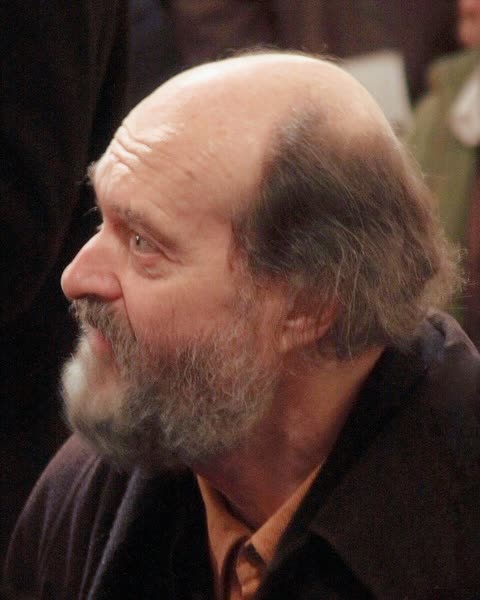
Arvo Pärt is one of the most performed living composers in the world. His music - slow, quiet, built from the simplest materials - has a rare power to create stillness, and its spiritual intensity has reached audiences far beyond the concert hall, from churches to film soundtracks.
Life in brief
Pärt was born in 1935 in Paide, in Estonia, which was soon absorbed into the Soviet Union. He studied at the Tallinn Conservatory while working as a sound engineer for Estonian radio, and he made his name with modernist works, including Nekrolog (1960), the first Estonian piece written with the twelve-tone technique. See serialism.
The Soviet authorities disapproved of both his modernism and his religious faith, and his Credo (1968), which set a Christian text, was banned. Pärt fell into a long creative crisis. For several years he wrote almost nothing, immersing himself instead in Gregorian chant and medieval and Renaissance polyphony. In 1976 he emerged with a short piano piece, Für Alina, written in a completely new style he called tintinnabuli, and a remarkable burst of works followed, including Fratres, Tabula Rasa, and Spiegel im Spiegel.
In 1980, under pressure from the authorities, he emigrated with his family, settling first in Vienna and then in West Berlin. A 1984 album of his music, Tabula Rasa, brought him international fame. After Estonia regained its independence he eventually returned home, and the Arvo Pärt Centre, which houses his archive, opened near Tallinn in 2018.
Music and style
Pärt named his style tintinnabuli after the Latin for "little bells." Its basic idea is simple: one voice moves gently through a melody, step by step, while a second voice sounds only the notes of a single chord, ringing around it like a bell. From that pairing, and from long silences, slow pulses, and pure, consonant harmony, he builds music of great intensity and calm. Much of it is sacred, reflecting his deep Orthodox Christian faith.
Key works
- Spiegel im Spiegel ("Mirror in the Mirror," 1978) - for violin (or cello) and piano: a slowly unfolding scale over gently rocking chords.
- Fratres (1977) - a chant-like piece that exists in many versions for different instruments.
- Tabula Rasa (1977) - a double concerto for two violins, strings, and prepared piano.
- Cantus in Memoriam Benjamin Britten (1977) - a lament for strings and a single bell. See Britten.
- Für Alina (1976) - the short piano piece where tintinnabuli began.
- Sacred choral music - including Magnificat, Passio, and Te Deum.
Legacy
Pärt is often grouped with the "holy minimalists," and his music has had an enormous influence on composers, film-makers, and listeners seeking calm in a noisy world. See minimalism and our guide to classical music for studying.
Where to start listening: Spiegel im Spiegel is the perfect introduction - about ten minutes of pure stillness. Then try Fratres and the Cantus in Memoriam Benjamin Britten.